Primary 3 Maths Tuition Singapore
Larger numbers, area and perimeter, and the first model drawings
P3 Maths adds the topics many children first find hard. 1-to-1 home tuition mapped to the P3 MOE syllabus and your child's school topics.
Reviewed by Theon Teo, Founder · Updated
Request a P3 Math tutor
- Typical rate
- S$25 to S$80/hr
- Your shortlist
- 3 to 12 tutors in 16h
- Wrong fit?
- Free re-match
★★★★★
TSS has been the best tuition agency I’ve tried. Alicia matched me with a tutor that really suits my learning style, and the lessons have helped me improve a lot.
No contract and no minimum number of lessons. The first lesson is a paid trial at the tutor's rate. If the fit is wrong, we find another tutor at no charge. Cancel or reschedule at least 24 hours ahead, or that lesson is charged.
Free now: school exam papers, formula sheets and topic guides, all in our free resources.
Results our tutors have helped with
AL7 to AL5
Zi Qing, Woodlands Ring Primary
AL3 to AL1
Nithila, Zhonghua Primary
AL5 to AL3
Matthew, Changkat Primary
Primary 3 Maths Tuition rates in Singapore
Hourly rates by level. Each bar runs from a part-time tutor to an ex-MOE teacher.
Rates by type of tutor, as a table
| Level | Part-time / undergrad | Full-time | Ex-MOE teacher |
|---|---|---|---|
| Lower Primary (P1-P4) | S$25-35/hr | S$35-45/hr | S$50-70/hr |
| Upper Primary / PSLE (P5-P6) | S$30-40/hr | S$40-55/hr | S$60-80/hr |
The final rate is set when you choose a tutor. See all tuition rates for 2027.
Why Primary 3 Maths feels harder
P3 is the first year with weighted assessments and the first year of real two-step problem sums, so gaps start to show up as marks.
The 6, 7, 8 and 9 times tables are not yet automatic, so long multiplication and division with remainders are slow and full of small slips.
Area and perimeter answers get swapped, or the unit is written as cm when it should be cm².
Compound units go wrong, for example 3 m 5 cm written as 35 cm instead of 305 cm.
Time questions with the 24-hour clock, or finding a finishing time that crosses the hour, cause confusion.
1 more
In two-step problem sums, the first step is right and then the child stops, or uses the wrong number in the second step.
These are skill gaps, not ability gaps, and P3 is the right year to close them.
The grade, explained
How PSLE Achievement Levels work
Each subject gets an AL from 1 (best) to 8. The four ALs add up to the PSLE score, from 4 to 32.
- AL190 and above
- AL285 to 89
- AL380 to 84
- AL475 to 79
- AL565 to 74
- AL645 to 64
- AL720 to 44
- AL8Below 20
Source: MOE PSLE scoring.
Primary 3 Maths
The P3 syllabus, organised for lessons
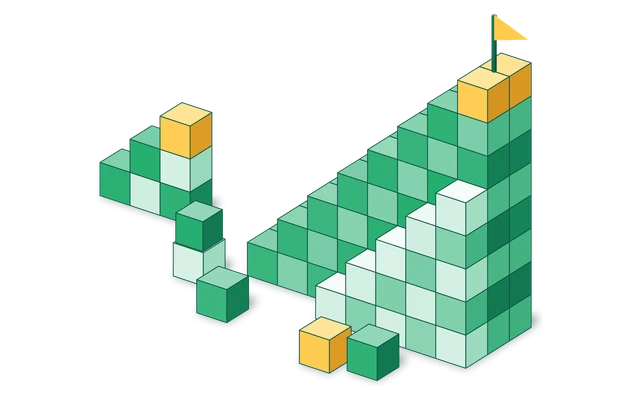
P3 content in the 2021 MOE syllabus is wider than P2 in every strand. A tutor groups related ideas so they are taught together rather than as separate chapters.
Numbers to 10,000 and the four operations
Larger numbers and the written methods that use them, with the last four times tables made automatic.
Topics covered
- Place value to thousands
- Patterns in number sequences
- Addition and subtraction up to 4 digits
- Times tables of 6, 7, 8 and 9
- Division with remainder
- Multiplying and dividing up to 3 digits by 1 digit
Equivalent fractions and money
Equivalent fractions make it possible to compare and add fractions with different denominators.
Topics covered
- Equivalent fractions
- Writing a fraction in its simplest form
- Comparing and ordering unlike fractions
- Adding and subtracting two related fractions within one whole
- Adding and subtracting money in decimal notation
Measurement and time
New units, compound units and conversions, plus time calculations.
Topics covered
- Length in kilometres and volume in millilitres
- Measurements in compound units, such as 2 kg 350 g
- Converting km and m, m and cm, kg and g, l and ml
- Time in seconds
- Finding start time, finishing time or duration
- The 24-hour clock
Area, perimeter, lines, angles and bar graphs
The first geometry with measurements, and graphs that use different scales.
Topics covered
- Area in square units, cm² and m²
- Perimeter of rectilinear figures, rectangles and squares
- Area of rectangles and squares
- Right angles, and angles larger or smaller than a right angle
- Drawing perpendicular and parallel lines
- Bar graphs with different scales on the axis
Some of our P3 Maths tutors

BeverlyLicensed Pharmacist
Qualifications: Bachelor of Pharmacy (Honours), Licensed Pharmacist
Experience: 5 years tutoring experience
See Beverly's profile
IsaacNTU Engineering Undergraduate
Qualifications: NTU Electrical & Electronic Engineering | Nanyang Polytechnic Background
Experience: 4 Years
See Isaac's profile
EsvaranNTU Computer Science Graduate
Qualifications: Bachelor of Computer Science (NTU)
Experience: 4 Years
See Esvaran's profile
P3 in 2027: the first year Maths is marked
MOE removed weighted assessments and exams for P1 and P2 from 2019. From P3, a school holds no more than one weighted assessment per subject in each term, plus the end-of-year exam, and mid-year exams are gone at every primary level. These are the 2027 terms that P3 Maths is marked across.
- 5 Jan to 12 Mar 2027Term 1At most one weighted Maths assessment, on the topics taught so far.
- 22 Mar to 28 May 2027Term 2At most one weighted assessment, then the long June break.
- 29 May to 27 Jun 2027June holidaysA good stretch to make the 6, 7, 8 and 9 times tables automatic.
- 28 Jun to 3 Sep 2027Term 3At most one weighted assessment.
- 13 Sep to 19 Nov 2027Term 4The end-of-year exam on the whole P3 syllabus.
Each school sets its own dates and weights, and some leave Term 1 unweighted, so the school's assessment plan is the one to follow. Share it with the tutor and the lessons can run a topic ahead of each test.
MOE on weighted assessments from P3. Read the MOE release.
MOE on removing mid-year exams. Read MOE's reply.
MOE school terms for 2027. See the 2027 calendar.
What WA1, WA2 and SA2 mean on a report book is in our school assessments guide.
Before you book a P3 Maths tutor
The questions P3 parents ask most before they enquire.
| Question | For Primary 3 |
|---|---|
| Which tutor suits P3? | Look for a tutor who teaches model drawing step by step, because P3 is where two-step problem sums begin. Undergraduate and full-time tutors both teach P3 often. An ex-MOE teacher costs more and suits a child who has fallen well behind. The shortlist shows each tutor's qualifications and experience with lower primary. |
| What does it cost? | P3 is in the Lower Primary band: S$25 to S$35 an hour with an undergraduate tutor, S$35 to S$45 with a full-time tutor and S$50 to S$70 with an ex-MOE teacher. Four 1.5-hour lessons with an undergraduate tutor come to S$150 to S$210. |
| How does it start? | Send us the school's P3 assessment plan if you have it, and the topics that cost marks, such as area and perimeter or remainders. We send 3 to 12 tutor profiles within 16 hours. The first lesson is a paid trial at the tutor's hourly rate, so you see how the tutor explains before committing. |
| What are the terms? | No contract and no minimum, so some families start a month before a weighted assessment and stop after the end-of-year exam. Cancel or move a lesson at least 24 hours ahead, or it is charged. A tutor who is not the right fit is replaced at no charge. |
Show the full tableShow less
Primary 3 Maths Tuition: a guide for parents
Primary 3 is where Maths starts to separate children. The P3 MOE syllabus takes whole numbers to 10,000, completes the multiplication tables with 6, 7, 8 and 9, adds division with remainders, equivalent fractions and adding and subtracting related fractions, money, measurement in compound units, time, area and perimeter, angles, perpendicular and parallel lines, and bar graphs. Problem sums become multi-step, and model drawing becomes the main tool for them.
Read the full guide
A P3 home tutor makes sure the times tables are automatic, then builds the model-drawing habit on two-step problems so the child can see the structure of a question before calculating. Area and perimeter are taught with drawings and real measurements, because confusing the two is the most common P3 mistake. Lessons follow the school topic schedule, and the tutor flags weak topics early, before P4 adds factors, multiples and decimals.
A P3 question many children get wrong: a rectangle is 8 cm long and 5 cm wide, so what is its perimeter? The usual mistake is to multiply 8 by 5 and write 40 cm, which is the area with the wrong unit. The perimeter is 8 + 5 + 8 + 5 = 26 cm. A tutor fixes this by having your child trace the edge with a finger for perimeter and shade the squares inside for area, then say which one the question asks for before writing anything.
The same habit helps with rectilinear figures, where children often miss a side, and it carries straight into P4, where the syllabus asks for the area and perimeter of composite figures and for a missing side given the area.
Official syllabus: MOE Singapore · SEAB Singapore
Reviews on Google
4.9 average on our Google Business Profile. Read them on Google
TSS stands out compared to other agencies I’ve tried. Everything was smooth from finding a tutor to starting lessons.
Tss is very outstanding compared to other tuition centre as they are very patient with the engagement i had with them.
xinyu · Google review
I’ve tried other tuition agencies before, but TSS is definitely the one I’d recommend. The service is much better.
Darius Campbell · Google review
Practise at home with our assessment book
Primary 3 Maths Tuition: frequently asked questions
What changes in Primary 3 Maths?
P3 is the first year with weighted assessments and an end-of-year exam, so marks start to appear on the report book. The content also widens: numbers to 10,000, the 6 to 9 times tables, equivalent fractions, compound units, the 24-hour clock, area and perimeter, angles and bar graphs. Problem sums move from one step to two steps.
How much does Primary 3 Maths tuition cost?
P3 is in our Lower Primary rate band. Typical hourly rates are S$25 to S$35 for an undergraduate tutor, S$35 to S$45 for a full-time tutor, and S$50 to S$70 for an ex-MOE teacher. You choose the tutor type, and a trial lesson comes first so you can judge the fit before committing to regular lessons.
My child did well in P2. Why is P3 a struggle?
Many P2 questions can be done by counting or by guessing the operation. P3 questions are longer and need a plan, and the larger numbers make counting too slow. Children whose times tables were never automatic feel this first. A tutor checks recall speed, then teaches a model drawing for each problem type so your child sees what to calculate before starting.
How often should a P3 child have tuition?
One lesson a week of 1 to 1.5 hours suits most P3 children. A second weekly lesson is worth it only for a short period, for example before the end-of-year exam or when several topics are weak at once. Between lessons, 10 to 15 minutes a day of times-table and mental sum practice does more than one long weekend session.
Last updated
Get started with Primary 3 Maths Tuition
Tell us your child's school, level and target exam timeline.