Chinese Tuition Singapore for Primary, Secondary and JC
1-to-1 standard Chinese (华文) tutors from P1 to JC, at home or online. Rates run S$30 to S$75 an hour at primary and S$35 to S$95 at secondary, and you get 2 to 4 tutor profiles within 16 hours.
Get matched with a tutor
No contract and no minimum number of lessons. The first lesson is a paid trial at the tutor's rate. Cancel or reschedule at least 24 hours ahead, or that lesson is charged.
- Typical rate
- S$30 to S$130/hr
- Your shortlist
- 2 to 4 tutors in 16h
- Wrong fit?
- Free re-match
★★★★★
tutors who teach with heart and seamless process, love their curated shortlist and in-house materials TSS is a W 👍🏻
Chinese Tuition rates in Singapore
Hourly rates by level. Each bar runs from a part-time tutor to an ex-MOE teacher.
Rates by type of tutor, as a table
| Level | Part-time / undergrad | Full-time | Ex-MOE or NIE-trained |
|---|---|---|---|
| Lower Primary (P1-P4) | S$30-40/hr | S$40-55/hr | S$50-65/hr |
| Upper Primary / PSLE (P5-P6) | S$35-50/hr | S$45-60/hr | S$55-75/hr |
| Lower Secondary (Sec 1-2) | S$35-50/hr | S$50-65/hr | S$60-80/hr |
| Upper Secondary / O-Level (Sec 3-4) | S$45-60/hr | S$55-75/hr | S$70-95/hr |
| Junior College / A-Level (JC1-JC2) | S$55-75/hr | S$70-95/hr | S$85-130/hr |
The final rate is set when you choose a tutor. See all rates on the pricing page.
Chinese Tuition Across Every Level
Pick your child's stage to see what tuition covers:
Lower primary Chinese (P1 to P3)
Hanyu pinyin, characters and reading aloud, then short sentences and simple picture writing.
Topics covered
- Hanyu pinyin and tones
- Recognising and writing characters (识字与写字)
- Reading aloud with the right pace and tone
- Building sentences and short picture writing
- Speaking about everyday topics
Upper primary and PSLE Chinese (P4 to P6)
The PSLE papers: composition, language use and comprehension, oral and listening.
Topics covered
- Topic composition (命题作文) and picture composition (看图作文)
- Vocabulary, idioms and sentence variety
- Open-ended comprehension answers in your child's own words
- Reading aloud and the video-based conversation
- Listening practice
Secondary Chinese (Sec 1 to 4, O-Level and SEC)
The step up from PSLE Chinese, then the final O-Level in 2026 and the SEC G1 to G3 papers from 2027.
Topics covered
- Email writing and longer compositions
- Narrative, expository and argumentative writing
- Cloze, word replacement and comprehension
- Oral: reading aloud and the video-based conversation
- Listening practice
Higher Chinese (primary and secondary)
A separate subject with its own papers. See our Higher Chinese tuition page.
JC H1 Chinese
Composition, comprehension, the oral presentation and listening for H1 Chinese (8655).
Why parents pick us
Matched to the Level
A P1 pinyin tutor and a Sec 4 composition tutor are different tutors. We match on level, exam and the paper your child needs help with.
A Range of Tutors
From undergraduate tutors to full-time and ex-MOE teachers, so we fit the right profile to your child's level, goals and budget. Each profile on your shortlist states the tutor's background.
Meet one of our Chinese tutors
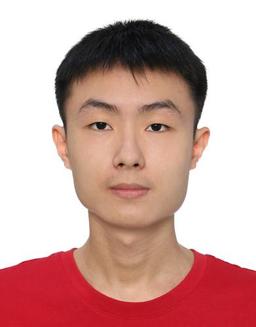
ChenNUS Computing Student
Qualifications: A-Levels, Undergraduate at NUS
Experience: 3 Years
See Chen's profile
Chinese exam papers, PSLE to SEC
The papers your child will sit, as set out in the SEAB syllabuses.
PSLE Chinese (0005): the papers
Language use and comprehension carries the most weight. Oral and listening together make up 35%.
| Paper | What it tests | Marks | Time | Weighting |
|---|---|---|---|---|
| Paper 1: Writing | One composition from a choice of two: a topic composition (命题作文) or a picture composition (看图作文), of at least 100 characters. An SEAB-approved dictionary is allowed | 40 | 50 min | 20% |
| Paper 2: Language Use and Comprehension | Multiple-choice language use, including hanyu pinyin, characters, words and sentences, then cloze, a reading passage and completing a dialogue. Open-ended questions on a practical text and a passage close the paper | 90 | 1 h 40 min | 45% |
| Paper 3: Oral | Reading a passage aloud (20 marks) and a conversation with the examiner about a short video clip (30 marks), after 10 minutes to read the passage and watch the clip | 50 | About 10 min | 25% |
| Paper 3: Listening Comprehension | 10 multiple-choice questions on recordings such as dialogues, announcements, advertisements and stories | 20 | About 30 min | 10% |
Show the full tableShow less
Source: SEAB, PSLE Chinese Language syllabus 0005. Open the PDF.
PSLE Higher Chinese (0015) has two written papers and no oral. Source: SEAB. Open the 0015 PDF.
SEC G3 Chinese (K320) from 2027: the papers
Writing and comprehension carry 65% between them. Students in Sec 4 in 2026 sit the final O-Level Chinese (1160) instead.
| Paper | What it tests | Marks | Time | Weighting |
|---|---|---|---|---|
| Paper 1: Writing | An email of at least 150 characters (20 marks, one of two questions) and a narrative, expository or argumentative composition of at least 300 characters (40 marks, one of three questions). An SEAB-approved dictionary is allowed | 60 | 2 h | 30% |
| Paper 2: Language Use and Comprehension | 30 questions: cloze, replacing wrongly used words, multiple-choice questions on 2 or 3 practical texts such as advertisements and news reports, and open-ended questions on 2 passages | 70 | 1 h 30 min | 35% |
| Paper 3: Oral | Reading a passage aloud (10 marks) and a conversation with the examiner based on a video clip (40 marks), after 10 minutes to prepare | 50 | About 15 min | 25% |
| Paper 3: Listening Comprehension | 10 multiple-choice questions on short dialogues and passages | 20 | About 30 min | 10% |
Show the full tableShow less
Source: SEAB, SEC G3 Chinese Language syllabus K320 (2027). Open the PDF.
G3, G2 and G1 Chinese: how the weighting shifts
All three levels have the same four parts. The lower the level, the more the oral counts.
| Part | G3 (K320) | G2 (K220) | G1 (K120) |
|---|---|---|---|
| Writing | 30%: an email and a composition, at least 150 and 300 characters | 30%: an email and a composition, at least 120 and 240 characters | 10%: a reply to an online post of at least 75 characters, typed with hanyu pinyin input |
| Language use and comprehension | 35%, 30 questions | 30%, 28 questions, answered on a computer | 25%, 15 multiple-choice questions |
| Oral | 25% | 30% | 45% |
| Listening | 10% | 10% | 20% |
Source: SEAB, SEC G2 Chinese Language syllabus K220 (2027). Open the K220 PDF.
Source: SEAB, SEC G1 Chinese Language syllabus K120 (2027). Open the K120 PDF.
H1 Chinese for JC: source, SEAB, A-Level H1 Chinese Language syllabus 8655 (2027). Open the 8655 PDF.
Chinese Tuition: a guide for parents
What Chinese tuition works on
Most lost marks in Chinese come from three places: compositions that repeat the same words and sentence patterns, comprehension answers that copy the passage instead of answering the question, and oral, where a child who rarely speaks Chinese freezes in the conversation. A tutor finds which of the three is costing your child marks, using your child's own school work and test papers.
Chinese also builds slowly. Vocabulary, idioms (成语) and sentence variety come from regular reading and marked writing over months, so it helps to start a year or more before an exam year rather than in it.
Read the full guide
Lower primary: pinyin, characters and reading
In P1 to P3, lessons are mostly hanyu pinyin (汉语拼音), recognising and writing characters, reading aloud and building short sentences. Hanyu pinyin is still tested in PSLE Paper 2, so a weak start shows up again in P6.
For a child from an English-speaking home, the first goal is comfort: hearing and using Chinese every week, so that reading and speaking stop feeling like a test. Tell us if your child needs some explanations in English at first and we note it in your request.
Upper primary and the PSLE
The PSLE has a composition, language use and comprehension, an oral with a video clip, and listening. In P4 a tutor builds the vocabulary and writing these papers need, and in P5 and P6 practises each paper directly, marks compositions line by line and runs timed practice. The paper format is in the table above.
Chinese or Higher Chinese?
Higher Chinese (高级华文) is a separate subject with its own papers, which some students take as well as Chinese. This page covers standard Chinese. If your child takes Higher Chinese too, see our Higher Chinese tuition page, or ask for one tutor who teaches both.
Secondary Chinese: the last O-Level and the SEC from 2027
Students in Sec 4 in 2026 sit the final O-Level Chinese (1160). From 2027, Sec 4 students sit the Singapore-Cambridge Secondary Education Certificate (SEC), where Chinese is offered at G3 (K320), G2 (K220) and G1 (K120). Secondary writing adds an email and a longer composition, which can be narrative, expository or argumentative, so tutors work on planning and paragraphing as well as vocabulary.
JC H1 Chinese
H1 Chinese (8655) can be sat at the end of JC1, or in the middle or at the end of JC2. It has a composition of at least 500 characters (30%), language use and comprehension (40%), an oral with a presentation of up to 2 minutes on a video clip and a discussion (25%), and listening (5%). A tutor works on the composition and the oral presentation, which together carry 55% of the marks.
Official syllabus: SEAB, PSLE Chinese Language syllabus (0005) · SEAB, SEC G3 Chinese Language syllabus (K320)
Reviews on Google
4.9 average on our Google Business Profile. Read them on Google
Alicia is very efficient at matching good tutors to my children and the tutor catalog sent is very detailed. They are professional, responsible and my kids love them a lot.
The tutor catalogue made it super easy to choose a tutor, and Alicia was really helpful throughout the whole process. Definitely recommend TSS.
Giselle Tay · Google review
Really happy with my tutor from TSS. The lessons are easy to understand, and the study materials they provide are actually useful.
Nicolas · Google review
Been matched with a tutor through us? Leave a review on Google
Chinese Tuition: frequently asked questions
How much does Chinese tuition cost in Singapore?
Chinese home tuition typically runs S$30 to S$65 an hour for P1 to P4, S$35 to S$75 for P5 and P6, S$35 to S$80 for Sec 1 and 2, S$45 to S$95 for Sec 3 and 4, and S$55 to S$130 for JC H1 Chinese. Part-time tutors sit at the lower end and ex-MOE teachers at the upper end.
Can a tutor help a child from an English-speaking home?
Yes. For these children the gap is usually vocabulary and confidence in speaking, not grammar rules. A tutor builds a weekly habit of reading and speaking Chinese and works on oral early. Tell us if your child needs some explanations in English at first, and we note it in your request.
When should we start Chinese tuition?
Start when a gap first shows, often in P1 or P2 with hanyu pinyin and reading. Vocabulary and composition take months to build, so for the PSLE it helps to start in P4 or P5 rather than in P6.
What is the difference between Chinese and Higher Chinese?
Higher Chinese is a separate, more demanding subject that some students take as well as Chinese. At the PSLE it has two written papers and no oral. This page covers standard Chinese. Our Higher Chinese tuition page covers that subject.
Can my child use a dictionary in the PSLE Chinese composition?
Yes. SEAB allows an approved dictionary in PSLE Paper 1 Writing, and in the SEC Chinese writing papers. A tutor can show your child how to use it quickly without losing writing time.
What changes for secondary Chinese from 2027?
From 2027, Sec 4 students sit the SEC instead of the O-Level. Chinese is offered at G3 (K320), G2 (K220) and G1 (K120). Each level has writing, language use and comprehension, oral and listening, with different weightings. Students in Sec 4 in 2026 sit the final O-Level Chinese (1160).
Do you have tutors for JC H1 Chinese?
Yes. We match JC students with tutors for H1 Chinese (8655): the composition of at least 500 characters, comprehension, the oral presentation on a video clip, and listening.
Are lessons at home or online?
Both, at the same hourly rate. Home lessons run across Singapore, and online lessons run on Zoom or Google Meet.
Last updated
Find Your Child's Chinese Tutor
Tell us your child's level and where Chinese marks are being lost, and we will match a tutor to your child.