Science Tuition Singapore, P3 to JC Home Tutors
1-to-1 science tutors at home or online for every level from P3 to JC, from S$30 to S$130 an hour. Tell us the level and get a shortlist of 2 to 4 tutor profiles within 16 hours.
Get matched with a tutor
No contract and no minimum number of lessons. The first lesson is a paid trial at the tutor's rate. Cancel or reschedule at least 24 hours ahead, or that lesson is charged.
- Typical rate
- S$30 to S$130/hr
- Your shortlist
- 2 to 4 tutors in 16h
- Wrong fit?
- Free re-match
★★★★★
Tss is very outstanding compared to other tuition centre as they are very patient with the engagement i had with them.
Science Tuition rates in Singapore
Hourly rates by level. Each bar runs from a part-time tutor to an ex-MOE teacher.
Rates by type of tutor, as a table
| Level | Part-time / undergrad | Full-time | Ex-MOE or NIE-trained |
|---|---|---|---|
| Lower Primary (P3-P4) | S$30-40/hr | S$40-55/hr | S$50-65/hr |
| Upper Primary / PSLE (P5-P6) | S$35-50/hr | S$45-60/hr | S$55-75/hr |
| Lower Secondary (Sec 1-2) | S$35-50/hr | S$50-65/hr | S$60-80/hr |
| Upper Secondary / O-Level (Sec 3-4) | S$45-60/hr | S$55-75/hr | S$70-95/hr |
| Junior College / A-Level (JC1-JC2) | S$55-75/hr | S$70-95/hr | S$85-130/hr |
The final rate is set when you choose a tutor. See all rates on the pricing page.
Science Tuition Across Every Level
Pick your child's level or subject for a page on what tuition covers there:
Primary Science (P3 to P6)
Science starts in P3. Tutors build the concepts, the process skills and the written answers that decide PSLE Science marks.
Topics covered
- The five primary themes: Diversity, Cycles, Systems, Interactions and Energy
- Process skills: observing, comparing and inferring from data
- Experiment questions: the variable tested and a fair test
- Booklet B answers written with the right scientific terms
- Timed PSLE practice in P6
Lower Secondary Science (Sec 1 and 2)
The step up from PSLE Science, at G1, G2 or G3, and the Sec 2 results that shape the Sec 3 choice of Pure or Combined Science.
Topics covered
- The particle model of matter, atoms and molecules
- Cells and transport in living things
- The ray model of light and electrical systems
- Chemical changes and ecosystems
- Definitions, units and practical write-ups
Physics (Sec 3 and 4)
The final O-Level Physics (6091) in 2026, then SEC G3 Physics (K323) from 2027.
Topics covered
- Kinematics, forces and energy
- Electricity and circuits
- Working out which idea a wordy question is testing
- Formula, working and units shown in every answer
- The practical paper
Chemistry (Sec 3 and 4)
The final O-Level Chemistry (6092) in 2026, then SEC G3 Chemistry (K324) from 2027.
Topics covered
- The mole concept and calculations
- Qualitative analysis: tests for gases and ions
- Acids, bases and salts
- Organic chemistry
- The practical paper
Biology (Sec 3 and 4)
The final O-Level Biology (6093) in 2026, then SEC G3 Biology (K325) from 2027.
Topics covered
- Precise definitions and labelled diagrams
- Transport, nutrition and homeostasis
- Molecular genetics
- Explaining a process step by step
- The data-based question and the practical paper
Combined Science (Sec 3 and 4)
Two sciences for one grade: 5086, 5087 or 5088 for the final O-Level, then K326, K327 or K328 from 2027.
Topics covered
- Both sciences kept in balance, so the weaker one does not pull the grade down
- The shared multiple-choice paper
- The structured paper for each science
- The practical test
JC H1 and H2 Sciences
H2 Physics (9478), H2 Chemistry (9476) and H2 Biology (9477), plus the H1 sciences, for the A-Level.
Topics covered
- H2 Physics: mechanics, electricity, waves and modern physics
- H2 Chemistry: organic mechanisms and calculations
- H2 Biology: cells, genetics and data analysis
- Data-based questions in Paper 2
- The Paper 4 practical
Why parents pick us
Matched to the Exact Subject
A P4 science tutor and an H2 Chemistry tutor are different tutors. We match on level, syllabus and the part of science your child needs.
A Range of Tutors
From undergraduate tutors to full-time and ex-MOE teachers, so we fit the right profile to your child's level, goals and budget.
Some of our science tutors
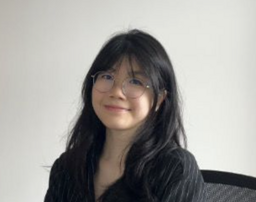
Tan Hong TingLead Tutor Catalyst Academy
Qualifications: Bachelor's degree in Psychology from NUS | Math & Science Specialist
Experience: 5 Years
See Tan Hong Ting's profile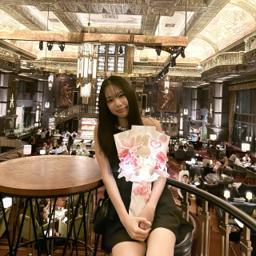
Christin
Qualifications: Information Systems, SMU
Experience: 5 years tutoring experience
See Christin's profile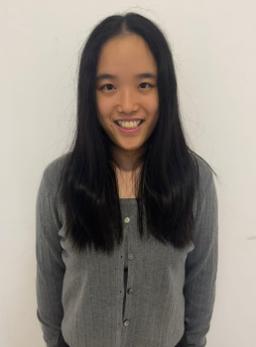
ZachareeTop 10% Medical Student
Qualifications: Medical Student | Top 10% of Cohort | A-Level 'A' in H2 Chemistry & H1 Economics
Experience: 4 Years
See Zacharee's profile
Science exam papers, PSLE to A-Level
The papers your child will sit, as set out in the SEAB syllabuses.
PSLE Science: one paper, two booklets
The paper is 1 hour 45 minutes long, and candidates answer every question in both booklets.
| Booklet | Questions | Marks for each question | Marks |
|---|---|---|---|
| Booklet A | 30 multiple-choice questions, each with four options | 2 | 60 |
| Booklet B | 10 to 11 structured questions | 2, 3, 4 or 5 | 40 |
Source: SEAB, PSLE Science syllabus 0009 (2026). Open the PDF.
SEC G3 Physics, Chemistry and Biology from 2027
Physics (K323), Chemistry (K324) and Biology (K325) each have the same three papers. Students in Sec 4 in 2026 sit the final O-Level papers instead: Physics 6091, Chemistry 6092 and Biology 6093.
| Paper | What it is | Time | Marks | Weighting |
|---|---|---|---|---|
| Paper 1 | 40 multiple-choice questions, all compulsory | 1 h | 40 | 30% |
| Paper 2 | Structured and free-response questions. Section A (70 marks) ends with two questions worth 20 marks together, one of them a data-based question of 8 to 12 marks. Section B (10 marks): answer one of two questions | 1 h 45 min | 80 | 50% |
| Paper 3 | Practical | 1 h 50 min | 40 | 20% |
Source: SEAB, SEC G3 Physics syllabus K323 (2027). Open the PDF.
Source: SEAB, SEC G3 Chemistry syllabus K324 (2027). Open the PDF.
Source: SEAB, SEC G3 Biology syllabus K325 (2027). Open the PDF.
SEC G3 Combined Science from 2027
Combined Science pairs two sciences. K326 is Physics and Chemistry, K327 is Physics and Biology, and K328 is Chemistry and Biology. Students in Sec 4 in 2026 sit the final O-Level Combined Science (5086, 5087 or 5088) instead.
| Paper | What it is | Time | Marks | Weighting |
|---|---|---|---|---|
| Paper 1 | 40 multiple-choice questions, split about equally between the two sciences | 1 h | 40 | 20% |
| Papers 2, 3 and 4 | Structured and free-response questions on one science each: Paper 2 is Physics, Paper 3 Chemistry and Paper 4 Biology. Candidates sit the two papers for their sciences | 1 h 15 min each | 65 each | 32.5% each |
| Paper 5 | Practical test on the two sciences | 1 h 30 min | 30 | 15% |
Source: SEAB, SEC G3 Science syllabus K326, K327 and K328 (2027). Open the PDF.
How lessons keep both sciences in balance is on our Combined Science tuition page.
A-Level H2 sciences for 2027
All three H2 sciences have four papers with the same weightings. Paper 2 in H2 Biology carries more marks than in the other two.
| Paper | Weighting | H2 Physics (9478) | H2 Chemistry (9476) | H2 Biology (9477) |
|---|---|---|---|---|
| Paper 1: multiple choice | 15% | 30 questions, 1 h | 30 questions, 1 h | 30 questions, 1 h |
| Paper 2: structured questions | 30% | 75 marks, 2 h | 75 marks, 2 h | 90 marks, 2 h |
| Paper 3: longer questions, with a choice of one 20-mark question | 35% | 75 marks, 2 h | 75 marks, 2 h | 75 marks, 2 h |
| Paper 4: practical | 20% | 50 marks, 2 h 30 min | 50 marks, 2 h 30 min | 50 marks, 2 h 30 min |
Source: SEAB, H2 Physics syllabus 9478 (2027). Open the PDF.
Source: SEAB, H2 Chemistry syllabus 9476 (2027). Open the PDF.
Source: SEAB, H2 Biology syllabus 9477 (2027). Open the PDF.
H1 Physics (8867), H1 Chemistry (8873) and H1 Biology (8876) are also on the SEAB list of A-Level syllabuses for 2027. See the SEAB list.
Real results from our tutors' students
O Level Combined Chem/Bio
St Margaret's Sec
O Level Chem/Phy
Yishun Town Sec
O Level Combined Bio/Chem
Tanglin Sec
Science Tuition: a guide for parents
Science tuition in Singapore, level by level
Science starts in Primary 3 and changes shape every few years. In primary school it is one subject, examined at the PSLE. In Sec 1 and Sec 2 it is lower secondary Science, taken at G1, G2 or G3. From Sec 3, most students take either Pure Sciences, where Physics, Chemistry and Biology are separate subjects, or Combined Science, which pairs two sciences into one grade. In JC, the sciences are H1 or H2 subjects for the A-Level.
A good science tutor for a P4 child is rarely the right tutor for an H2 Chemistry student. So we match on your child's level and the exact subject they sit, and the tutor starts by finding where marks are being lost: the concept itself, the way answers are written, or the practical paper.
Read the full guide
Primary Science: P3 to P6 and the PSLE
The primary syllabus is built on five themes: Diversity, Cycles, Systems, Interactions and Energy. P3 and P4 lay the base, and P5 and P6 add much of the PSLE content, such as electrical systems, plant transport and reproduction. Many marks are lost on how answers are written rather than on what the child knows. A child who understands why a plant wilted can still lose the mark by using everyday words instead of the scientific term the marker looks for.
PSLE Science is one paper of 1 hour 45 minutes. Booklet A has 30 multiple-choice questions for 60 marks, and Booklet B has 10 to 11 structured questions for 40 marks. A tutor works on both: reading every option with care in Booklet A, and in Booklet B, using the data or diagram given and explaining cause and effect in clear steps. Our primary science tuition page covers this in more detail.
Lower secondary Science: Sec 1 and Sec 2
Lower secondary Science is one two-year syllabus, and each school decides which topics fall in Sec 1 and which in Sec 2. MOE builds the G2 and G3 syllabus on five themes: the Scientific Endeavour, Diversity, Models, Interactions and Systems. Topics include the particle model of matter, atoms and molecules, cells, the ray model of light, chemical changes, electrical systems and transport in living things. Answers now need definitions, units and short calculations, which is a big step up from PSLE Science.
Sec 2 also matters for what comes next. Schools use Sec 2 results when they allocate upper secondary subjects, including whether a student takes Pure or Combined Science. A tutor in these two years makes sure the ideas Sec 3 builds on, such as the particle model and electricity, are secure.
Sec 3 and Sec 4: Pure or Combined Science, the final O-Level and the SEC
Students in Sec 4 in 2026 sit the final GCE O-Level in October and November 2026. From 2027, Sec 4 students sit the Singapore-Cambridge Secondary Education Certificate (SEC). At G3, Physics is K323, Chemistry is K324 and Biology is K325, in place of the O-Level 6091, 6092 and 6093. Combined Science runs as K326 (Physics and Chemistry), K327 (Physics and Biology) and K328 (Chemistry and Biology), in place of 5086, 5087 and 5088.
Each G3 Pure Science has three papers: multiple choice, a structured and free-response paper, and a practical paper worth 20%. In Combined Science the student sits one shared multiple-choice paper, one structured paper for each of the two sciences, and a practical test. In Chemistry, the mole concept comes early in Sec 3 and many later calculation topics depend on it, so a gap there spreads. Tell us the exact subjects your child takes, and we match a tutor who teaches that syllabus.
JC: H1 and H2 sciences
For the A-Level in 2027, H2 Physics is 9478, H2 Chemistry is 9476 and H2 Biology is 9477. Each has four papers: multiple choice, structured questions, longer structured questions and a practical. H1 Physics (8867), H1 Chemistry (8873) and H1 Biology (8876) carry a lighter load. The step up from Sec 4 is large, and gaps left in JC1 are hard to repair in JC2, so it helps to start early. See our H2 Physics, H2 Chemistry and H2 Biology pages for how lessons run.
Home tutor, centre or online
For a specific gap, such as Booklet B answers, the mole concept or the practical paper, 1-to-1 tuition at home or online usually helps most, because every lesson is planned around your child. A centre class can suit a student who is coping and wants a fixed weekly routine with classmates. Online lessons cost the same as home lessons.
Official syllabus: SEAB, PSLE Science syllabus (0009) · MOE, G2/G3 Lower Secondary Science syllabus (PDF) · SEAB, SEC G3 syllabuses 2027 · SEAB, A-Level syllabuses examined in 2027
Reviews on Google
4.9 average on our Google Business Profile. Read them on Google
Alicia was really responsive and matched me with a tutor so quickly. The whole process was smooth.
TSS stands out compared to other agencies I’ve tried. Everything was smooth from finding a tutor to starting lessons.
Ashlyn Loo · Google review
I’ve tried other tuition agencies before, but TSS is definitely the one I’d recommend. The service is much better.
Darius Campbell · Google review
Been matched with a tutor through us? Leave a review on Google
Science Tuition: frequently asked questions
How much does science tuition cost in Singapore?
Science home tuition typically runs S$30 to S$65 an hour for P3 and P4, S$35 to S$75 for P5 and P6, S$35 to S$80 for Sec 1 and 2, S$45 to S$95 for Sec 3 and 4, and S$55 to S$130 for JC H1 and H2 sciences. Within each range, part-time tutors sit at the lower end and ex-MOE teachers at the upper end. You pay only the hourly rate shown on your tutor shortlist.
When should my child start science tuition?
There is no single right time. Two natural points are P5, when much of the PSLE content arrives, and Sec 3, when Pure or Combined Science begins. Starting a year earlier, in P4 or Sec 2, gives answer habits time to settle before the exam years. If school marks have dropped, it is better to start then than to wait.
Should my child take Pure Sciences or Combined Science?
Pure Sciences give a separate grade for each science and cover more content. Combined Science pairs two sciences into one grade. Schools allocate upper secondary subjects using Sec 2 results, and the choice can affect some JC subject combinations later. A tutor can give an honest view of how your child is coping, but the school makes the allocation.
What changes for science with the SEC from 2027?
Sec 4 students in 2026 sit the final O-Level. From 2027, Sec 4 students sit the SEC, where G3 Physics is K323, Chemistry is K324, Biology is K325 and Combined Science is K326, K327 or K328. Each G3 Pure Science has three papers, including a practical worth 20%. Tutors teach to the syllabus your child will actually sit.
Can one tutor teach both sciences in Combined Science?
Yes, when the tutor teaches both parts. Tell us the combination, for example Physics and Chemistry, when you ask for a shortlist, and we look for tutors who teach both sciences in it.
Are lessons at home or online?
Both, at the same hourly rate. Home lessons are available island-wide, and online lessons run on Zoom or Google Meet. Some families mix the two.
Do you cover JC H1 and H2 sciences?
Yes. We match JC students with tutors for H2 Physics (9478), H2 Chemistry (9476) and H2 Biology (9477), and for the H1 sciences. See our H2 subject pages for how lessons run.
Is there a contract or a minimum number of lessons?
No. There is no contract and no minimum number of lessons. To cancel or reschedule a lesson, tell us at least 24 hours ahead, otherwise that lesson is charged. The first lesson is a paid trial at the tutor's hourly rate.
Last updated
Find Your Child's Science Tutor
Tell us your child's level and science subjects, and we will match a tutor to your child.