IGCSE Chemistry Syllabus & Study Guide
Cambridge 0620 and Edexcel, with Year 10 and Year 11 specialists for international school students
Get matched with a tutor
★★★★★
tutors who teach with heart and seamless process, love their curated shortlist and in-house materials TSS is a W 👍🏻
IGCSE Chemistry in brief
IGCSE Chemistry is taken by international school students in Singapore at the end of Year 11 and is commonly expected before IB Chemistry HL or A-Level Chemistry. The two dominant exam boards are Cambridge IGCSE Chemistry (syllabus 0620, Extended tier) and Edexcel International GCSE Chemistry (Specification 4CH1, which is not tiered). Cambridge 0620 Extended candidates sit three papers: Paper 2 (40 multiple-choice questions, 45 minutes), Paper 4 (Extended theory) and either Paper 5 (Practical Test) or Paper 6 (Alternative to Practical).
Read the full guide
The Edexcel 4CH1 format is two papers (Paper 1C and Paper 2C). The syllabi cover atomic structure and the periodic table, bonding and structure, stoichiometry and the mole concept, electrochemistry, energetics, rates of reaction, equilibria, acids and bases, redox, organic chemistry (alkanes, alkenes, alcohols, carboxylic acids, esters, polymers), atmosphere and environment.
Our IGCSE Chemistry tutors run a structured Year 10 to Year 11 programme. The Year 10 syllabus covers atomic structure, bonding, mole concept and stoichiometry. The Year 11 syllabus then layers electrochemistry, energetics, kinetics, equilibria, organic chemistry and the practical (or Alternative to Practical) component. Each tutor's own qualifications and teaching experience are shown on the shortlist.
The Alternative to Practical paper (Paper 6 in Cambridge 0620) is often underprepared in IGCSE Chemistry because it looks like an extension of the theory paper. The paper tests apparatus knowledge, observational accuracy, data tabulation, graph plotting and basic uncertainty analysis without requiring a real lab. It rewards drilling the apparatus diagrams (gas syringes, burettes, pipettes, condensers, separating funnels, fractional-distillation columns) and the standard observation phrases (white precipitate, effervescence, colour change from blue to green, gas turns limewater milky). Our tutors build in Alternative to Practical practice from Year 11 Term 2 onwards, working through past-paper variations. For students heading to IB Chemistry HL, this paper is also a useful bridge into the IB IA methodology.
Official syllabus: Cambridge, IGCSE
IGCSE Chemistry tuition rates
Real ranges by level and tutor tier. We re-match free if the fit is wrong.
| Level | Part-time / undergrad | Full-time | Ex-MOE or NIE-trained |
|---|---|---|---|
| IB Diploma (DP1-DP2) / IGCSE | S$60-80/hr | S$75-110/hr | S$95-150/hr |
Final rate is set on tutor match and depends on tutor tier, level and lesson frequency. See full pricing page.
Common IGCSE Chemistry Struggles We Fix
IGCSE Chemistry marks at the A and A* grade levels are decided on theory paper extended-response and the Alternative to Practical paper. The patterns we see most often:
Mole concept calculations break down on multi-step questions involving limiting reagents.
Organic chemistry reactions (substitution, addition, condensation) are confused under exam pressure.
Electrolysis questions confuse the cathode and anode product predictions.
Alternative to Practical paper loses marks because the student has not been drilled on apparatus selection, observation accuracy and result interpretation.
2 more
Extended-response answers are conceptually correct but use wrong vocabulary.
Energy profile diagrams and exothermic vs endothermic questions are drawn incorrectly.
These are the gaps our IGCSE Chemistry tutors fix with structured Year 10 to Year 11 sequencing and weekly past-paper drilling.
IGCSE Chemistry Programme Structure
A Cambridge 0620 Extended or Edexcel IGCSE Chemistry syllabus-aligned programme:
Atomic Structure, Bonding, Stoichiometry (foundation)
The Year 10 building blocks for everything else.
Topics covered
- Atomic structure and electron configuration
- Periodic table and trends
- Ionic, covalent and metallic bonding
- Mole concept and stoichiometry calculations
- Limiting reagent and percentage yield
- Empirical and molecular formulae
Acids, Bases, Salts, Electrochemistry
High-stakes Year 11 question block.
Topics covered
- Acid-base reactions and pH
- Preparation of salts (insoluble and soluble)
- Solubility rules and precipitation
- Redox reactions
- Electrolysis (molten and aqueous)
- Electrochemical cells (Cambridge 0620 extension)
Energetics, Kinetics, Equilibria
Year 11 conceptual topics.
Topics covered
- Exothermic and endothermic reactions
- Energy profile diagrams and activation energy
- Rate of reaction (factors and graphical analysis)
- Reversible reactions and Le Chatelier principle
- Catalysis and enzymes
Organic Chemistry and Practical
The Year 11 capstone topics.
Topics covered
- Alkanes (combustion, substitution)
- Alkenes (addition, polymerisation)
- Alcohols (oxidation, fermentation)
- Carboxylic acids and esters
- Polymers (addition vs condensation)
- Alternative to Practical (apparatus, observation, interpretation)
- Practical paper (where applicable)
Why parents pick us
IGCSE-Specialist Tutors
Our IGCSE Chemistry tutors teach Cambridge 0620 Extended or Edexcel IGCSE Chemistry directly.
Year 10 to Year 11 Continuity
IGCSE Chemistry Year 11 papers assume the Year 10 atomic structure and stoichiometry foundations. We aim to keep the same tutor across both years.
Pathway-Aware Coaching
For students heading to IB Chemistry HL, we shape the Year 11 lessons to bridge directly into HL depth, especially in organic chemistry and equilibria.
Meet one of our IGCSE Chemistry tutors
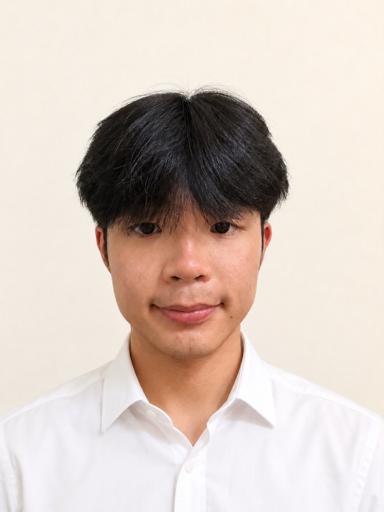
Lloyd, NUS Business
Credentials: NUS Business Administration | Eunoia JC Graduate | A-Level Distinctions in H2 Math, H2 Chemistry, H1 Biology, GP
Specialises in: NUS Business Student, A-Level High Achiever, Primary Foundation Building, Secondary Subject Mastery, Effective Study Strategies
Track record: 3 Years
A note from Lloyd: "From Eunoia JC Excellence to NUS Success My academic journey from Eunoia Junior College to securing a coveted place at NUS Business School taught me the exact strategies needed for academic excellence. I achieved Distinctions across H2 Mathematics, H2 Chemistry, H1 Biology, and General Paper, placing me in the top tier of A-Level graduates."
Read more
More about LloydShow less
Reviews on Google
5.0 average on our Google Business Profile. Read them on Google
My tutor is always on time, well-prepared, and makes difficult topics much easier to understand.
Alicia was really responsive and matched me with a tutor so quickly. The whole process was smooth.
Lee Gavin · Google review
TSS stands out compared to other agencies I’ve tried. Everything was smooth from finding a tutor to starting lessons.
Ashlyn Loo · Google review
Been matched with a tutor through us? Leave a review on Google
IGCSE Chemistry: frequently asked questions
What does IGCSE Chemistry cover?
States of matter, atoms and bonding, stoichiometry, acids and bases, the periodic table, metals, organic chemistry and experimental techniques.
How is IGCSE Chemistry assessed?
Written papers, with practical skills assessed either through an alternative-to-practical paper or a practical examination, depending on the centre.
How does IGCSE Chemistry compare to O-Level?
They are broadly equivalent international and Singapore-Cambridge qualifications. The syllabus structure differs but the depth is comparable.
IGCSE Chemistry is the Foundation for IB Chemistry HL
IGCSE Chemistry lays the groundwork for IB Chemistry HL, which is often required for Medicine, Pharmacy and Biomedical Sciences.