H2 Chemistry Tuition (9476), JC Tutors & Rates
1-to-1 home tutors for JC1 and JC2 on the 9476 syllabus, from S$55 an hour.
Reviewed by Theon Teo, Founder · Updated
Get matched with a tutor
- Typical rate
- S$55 to S$130/hr
- Your shortlist
- 2 to 4 tutors in 16h
- Wrong fit?
- Free re-match
★★★★★
I’ve tried other tuition agencies before, but TSS is definitely the one I’d recommend. The service is much better.
H2 Chemistry Tuition rates in Singapore
Hourly rates for JC1 to JC2, by type of tutor.
The same rates as a table
| Level | Part-time / undergrad | Full-time | Ex-MOE or NIE-trained |
|---|---|---|---|
| Junior College / A-Level (JC1-JC2) | S$55-75/hr | S$70-95/hr | S$85-130/hr |
Rates as of October 2026. The final rate is set when you choose a tutor. See all rates on the pricing page.
The grade, explained
How H2 grades turn into rank points
Three H2 subjects plus General Paper make the University Admission Score, out of 70 from 2026.
- A20 points
- B17.5 points
- C15 points
- D12.5 points
- E10 points
- S5 points
- U0 points
Source: MOE university admission rank points.
Our H2 Chemistry Tuition Programme
Lessons cover all 13 sections of the 9476 syllabus, grouped the way students usually think about them:
Organic Chemistry
Mechanisms learned as electron flow, so students can predict products they have not seen before.
Topics covered
- Introduction and isomerism, including stereoisomerism (11.1, 11.2)
- Organic reactions and mechanisms (11.3)
- Hydrocarbons: alkanes, alkenes and arenes (11.4)
- Halogen derivatives, hydroxy compounds and carbonyl compounds (11.5 to 11.7)
- Carboxylic acids and derivatives, nitrogen compounds (11.8, 11.9)
- Polymers (11.10)
Physical Chemistry
Calculations with correct units and signs, and the reasoning behind them.
Topics covered
- The mole concept and stoichiometry (6)
- The gaseous state (3)
- Chemical energetics, including Gibbs free energy and entropy (7)
- Reaction kinetics (8)
- Chemical equilibria (9)
- Acid-base and solubility equilibria (10)
- Electrochemistry (12)
Inorganic Chemistry
Trends explained from structure and bonding rather than memorised.
Topics covered
- Atomic structure (1)
- Chemical bonding (2)
- Theories of acids and bases (4)
- The Periodic Table: Period 3, Group 2 and Group 17 (5)
- The chemistry of transition elements, Sc to Cu (13)
Exam and Practical Skills
Timed practice for each paper and the written skills Paper 4 tests.
Topics covered
- Data-based questions (Paper 2)
- Integrated structured questions (Paper 3)
- Planning an experiment (Paper 4)
- Sources of error, anomalous results and evaluation (Paper 4)
- Exam time management
- Common mistake avoidance
How our H2 Chemistry coaching works
First-principles reasoning for Paper 3
Le Chatelier, Hess cycles and kinetics are taught as reasoning tools, so unfamiliar planning questions become solvable rather than memorised.
Organic chemistry as electron flow
Mechanisms are taught as electron movement, so students can predict the product of a reaction they have never seen.
Practical paper not left to last
Paper 4 technique is built through JC2 rather than crammed, a reliable and frequently-missed source of marks.
Meet one of our tutors
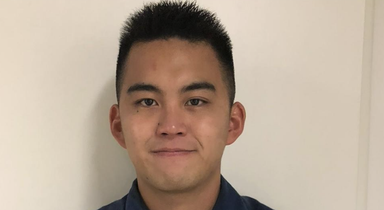
Dion Tan, Chemistry & Science Tutor
Credentials: Master of Science, National University of Singapore. Bachelor of Science in Chemistry and Biological Chemistry, Nanyang Technological University
Specialises in: Chemistry and Science, O-Level through A-Level
Track record: 10 years' teaching experience
More about DionShow less
H2 Chemistry 9476: the four papers and the JC1 to JC2 plan
Every candidate sits all four papers. Paper 3 carries the most weight.
| Paper | What it is | Time | Marks | Weighting |
|---|---|---|---|---|
| Paper 1 | Multiple choice: 30 compulsory questions, each with 4 options | 1 h | 30 | 15% |
| Paper 2 | Structured questions, all compulsory, including 20 to 25 marks of data-based questions | 2 h | 75 | 30% |
| Paper 3 | Section A: 3 to 4 compulsory structured questions (55 marks). Section B: answer one of two 20-mark questions | 2 h | 75 | 35% |
| Paper 4 | Practical: planning (4%), plus handling apparatus and measuring, presenting data, and analysis and evaluation (16%) | 2 h 30 min | 50 | 20% |
Source: SEAB, H2 Chemistry syllabus 9476 for the 2027 examination. Open the 9476 syllabus PDF.
JC1 to JC2 topic timeline for H2 Chemistry, by term
SEAB sets the topics but not the order. Each JC plans its own lecture sequence, so treat this as a typical plan and check it against your child's school schedule. Numbers in brackets are the section numbers in the 9476 syllabus.
- JC1 Term 1Atomic structure (1), chemical bonding (2), the mole concept and stoichiometry (6), the gaseous state (3)Focus: Mole calculations, bonding and the shapes of molecules. Every later topic builds on these.
- JC1 Term 2Chemical energetics, including Gibbs free energy and entropy (7), reaction kinetics (8), organic introduction and isomerism (11.1, 11.2)Focus: Energy cycles with correct signs and units. Rate equations worked out from data.
- JC1 Term 3Chemical equilibria (9), theories of acids and bases (4), the Periodic Table (5), organic reactions and mechanisms and hydrocarbons (11.3, 11.4)Focus: Equilibrium constants with units. Mechanisms drawn as electron flow. Period 3, Group 2 and Group 17 trends.
- JC1 Term 4Halogen derivatives, hydroxy compounds and carbonyl compounds (11.5 to 11.7), then revision for the promotional examsFocus: Each functional group linked to its reagents and conditions.
- JC2 Term 1Chemistry of aqueous solutions: acid-base and solubility equilibria (10), carboxylic acids and derivatives, nitrogen compounds (11.8, 11.9)Focus: pH, buffer and solubility product calculations. Multi-step synthesis routes.
- JC2 Term 2Electrochemistry (12), the chemistry of transition elements (13), polymers (11.10)Focus: Electrode potentials and cell calculations. Paper 4 planning practice.
- JC2 Term 3Whole-syllabus revision and school preliminary examsFocus: Timed Papers 1 to 4. Integrated Paper 3 questions that mix topics.
- JC2 Term 4A-Level papers at the end of the yearFocus: Short timed sets and error review between papers.
Show the full timelineShow less
Topic names and section numbers are from SEAB's 9476 syllabus for 2027. Read the full topic list.
H2 Chemistry Tuition: a guide for parents
What H2 Chemistry 9476 is, and who needs it
H2 Chemistry is the A-Level Chemistry subject taken over JC1 and JC2. SEAB revised it from 2026: the syllabus code is now 9476, and the older 9729 syllabus has its last exam in 2026, so school candidates sitting the A-Level in 2027 take 9476. H2 Chemistry is a prerequisite for medicine, dentistry, pharmacy and many life science and chemical engineering degrees at NUS and NTU.
The 9476 syllabus is built on three core ideas (Matter, Structure and Properties, Transformation) and four extension topics: Chemistry of Aqueous Solutions, Organic Chemistry, Electrochemistry and the Chemistry of the Transition Elements. In the SEAB syllabus document these make up 13 numbered sections, which the timeline above follows.
Read the full guide
What separates an A from a B
The difference between an A and a B in H2 Chemistry is rarely content recall. It is the integrated structured questions in Paper 3 and the data-based questions in Paper 2, which reward students who reason from first principles (Le Chatelier's principle, Hess cycles, rate equations) in unfamiliar contexts rather than pattern-matching memorised answers. Tutors practise with past A-Level questions and school prelim papers, and catch the slips that cost marks most often: dropping units in equilibrium constant calculations, confusing the rate-determining step with the overall order of reaction, and sign conventions in energetics and electrochemistry.
Organic chemistry: learn mechanisms as electron flow
Organic chemistry is where many JC2 students lose the most marks. Students who memorise mechanisms without tracking electron flow get stuck when a question pairs a familiar reagent with an unfamiliar molecule, for example in nucleophilic substitution (SN1 and SN2) or electrophilic addition to alkenes. The 9476 syllabus itself describes polar mechanisms as electrons flowing from electron-rich to electron-poor sites, and expects students to predict the products of reactions similar to the ones they have learned. Tutors rebuild mechanisms from electron flow, then practise multi-step synthesis questions by planning the route backwards from the target molecule.
The practical paper is teachable
The practical paper (Paper 4, 50 marks, 20% of the grade) is often underprepared. Planning an experiment is worth 4% on its own. Tutors coach the written skills the paper tests: naming the main sources of error and how to reduce them, spotting anomalous results, and justifying each step of a procedure.
How our tutors plan lessons
At The Singapore Syllabus, H2 Chemistry tutors map lessons to your child's JC lecture schedule, so each topic is covered before the school common test on it. The first lessons find the gaps from recent tests. Later lessons mix new topics with timed questions from earlier ones.
Official syllabus: SEAB, H2 Chemistry 9476 syllabus for 2027 (PDF) · SEAB, A-Level syllabuses examined in 2027
Reviews on Google
5.0 average on our Google Business Profile. Read them on Google
The tutor catalogue made it super easy to choose a tutor, and Alicia was really helpful throughout the whole process. Definitely recommend TSS.
tutors who teach with heart and seamless process, love their curated shortlist and in-house materials TSS is a W 👍🏻
Gwen Tan · Google review
Really happy with my tutor from TSS. The lessons are easy to understand, and the study materials they provide are actually useful.
Nicolas · Google review
Been matched with a tutor through us? Leave a review on Google
H2 Chemistry Tuition: frequently asked questions
How much does H2 Chemistry tuition cost?
JC home tuition runs about S$55 to S$75 an hour with an undergraduate tutor, S$70 to S$95 with a full-time tutor and S$85 to S$130 with an ex-MOE teacher. Most JC students take 1.5 to 2.5 hours a week, so one 2-hour lesson a week with a full-time tutor comes to about S$600 to S$820 a month.
When should my child start H2 Chemistry tuition?
Many students start in JC1 after the first common tests show a gap, or before the JC1 promotional exams. Starting in JC1 leaves time to secure organic mechanisms and physical chemistry before JC2, which is mostly revision, timed papers and practical preparation.
Why is my child stuck at a B despite memorising everything?
Memorisation caps out at Paper 3, which places familiar chemistry in unfamiliar contexts by design. The A grade rewards reasoning from first principles, Le Chatelier, Hess cycles, kinetics, not recall.
What is the best way to learn organic chemistry?
Learn each mechanism as electron flow, where the electrons are and why they move, not as memorised arrows. A student who understands the electron flow can predict the product of a reaction they have never seen.
How important is the H2 Chemistry practical paper?
Paper 4 is 20% of the grade: a 2 hour 30 minute practical worth 50 marks. Planning carries 4% and the hands-on, data and evaluation skills carry 16%. It rewards steady practice through JC2 rather than a late cram, and it is often under-prepared.
Is 1-to-1 tuition or a group class better for H2 Chemistry?
1-to-1 home tuition suits a student with specific weak topics or one who is behind after common tests, because every lesson is planned around that student. A group class suits a student who is on track and wants regular structured practice. JC home tuition is charged by the hour (S$55 to S$130 depending on the tutor), while centre classes usually charge a monthly fee for a shared class.
Last updated
Find an H2 Chemistry Tutor for JC1 and JC2
H2 Chemistry is a prerequisite for medicine, pharmacy and many science courses.