O-Level and SEC Combined Science Tuition
Syllabus 5086 and SEC G3 K326: Physics and Chemistry, taught side by side with weekly past-paper practice
Get matched with a tutor
- Typical rate
- S$45 to S$95/hr
- Your shortlist
- 2 to 4 tutors in 16h
- Wrong fit?
- Free re-match
★★★★★
Alicia is very efficient at matching good tutors to my children and the tutor catalog sent is very detailed. They are professional, responsible and my kids love them a lot.
Combined Science Tuition rates in Singapore
Hourly rates for Secondary 3 to 4, by type of tutor.
The same rates as a table
| Level | Part-time / undergrad | Full-time | Ex-MOE or NIE-trained |
|---|---|---|---|
| Upper Secondary / O-Level (Sec 3-4) | S$45-60/hr | S$55-75/hr | S$70-95/hr |
The final rate is set when you choose a tutor. See all rates on the pricing page.
Is Your Child Struggling with O-Level Combined Science?
Combined Science compresses two demanding subjects into one paper structure.
Strong on one component (often Physics) but lost on the other (often Chemistry), so the average grade stays stuck at C5/C6.
Mole concept, stoichiometry and qualitative analysis feel like a foreign language no matter how many times school covers them.
Physics calculations make sense in class but fall apart on exam questions where the student cannot identify which formula applies.
Free Response (Section B of the Physics and Chemistry papers) keyword penalties, where the student has the right idea but loses marks for not phrasing answers the way examiners require.
2 more
Time pressure on Paper 1 MCQ leaves the last 10 questions rushed or guessed.
Worry that a poor Combined Science grade will block Junior College, Polytechnic engineering courses, or specific Polytechnic biomedical / chemistry programmes.
Lessons target these gaps directly, with a structured programme, weekly past-paper practice and direct feedback on exam technique.
The grade, explained
How O-Level and SEC grades turn into points
JC admission adds English and the best relevant subjects. Fewer points is better. From the 2028 PSE, JC needs an L1R4 of 16 or below, every subject at G3.
- A11 point
- A22 points
- B33 points
- B44 points
- C55 points
- C66 points
- D77 points
- E88 points
- F99 points
Source: MOE Post-Secondary Admissions Exercise (PSE), JC and MI criteria.
Our Combined Science Tuition Programme
A 5086-aligned programme that covers Physics and Chemistry in parallel:
Physics Component
Cover every Physics topic in the 5086 syllabus with concept-first teaching followed by exam-style practice.
Topics covered
- Kinematics, dynamics and forces
- Mass, weight, density and pressure
- Energy, work and power
- Thermal physics and kinetic model
- Light, lenses and waves
- Static electricity, current electricity and DC circuits
- Magnetism and electromagnetic effects
Chemistry Component
Build the conceptual chain from atomic structure through to organic chemistry. Many students find these Chemistry topics the hardest part of the paper.
Topics covered
- Atomic structure, periodic table and bonding
- Mole concept, stoichiometry and chemical calculations
- Acids, bases, salts and qualitative analysis
- Redox reactions and electrochemistry
- Energy changes, rate of reaction and equilibrium
- Organic chemistry: alkanes, alkenes, alcohols, carboxylic acids
- Atmosphere and environmental chemistry
Exam Technique & Free Response
Teach the specific answering style the SEAB and Cambridge markers reward. The difference between a 2-mark answer and a 0-mark answer is usually keyword discipline.
Topics covered
- Paper 1 MCQ time strategy and elimination tactics
- Paper 2 Section A short-answer keyword discipline
- Paper 2 Section B Free Response question dissection
- Data analysis and graph interpretation
- Practical-based question patterns
- Marking scheme literacy from past Cambridge papers
Past-Year Paper Drilling
Systematic practice on real exam material, not generic worksheets.
Topics covered
- O-Level 5086 past papers (10+ years)
- School-style prelim questions
- Topical compilations for targeted weakness fixing
- Timed full-paper simulations
- Mark scheme walkthroughs and self-grading
- Common-mistake catalogues and avoidance drills
How our Combined Science coaching works
Mole concept secured first
The Sec 3 mole concept underpins the entire quantitative half of 5086, lessons make it automatic before moving on.
Both sciences kept in balance
Because one combined grade covers two sciences, coaching tracks the weaker half so a single soft topic does not drag the result.
Command-word answer technique
Structured-question answers are drilled against the mark scheme's verbs, state, explain, describe, so knowledge converts to marks.
Meet one of our tutors
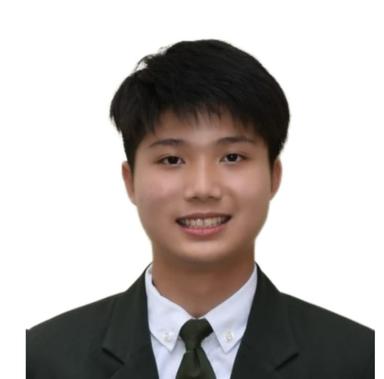
Denzel Tan, Lead Science Specialist Catalyst
Credentials: Undergraduate in Biology | Mentored by Dion | Sciences Specialist
Specialises in: Student-Centric Approach, Concept Mastery, Question Encouragement, Supportive Environment, Confidence Building
Track record: 3 Years
A note from Denzel: "Academic Excellence & Expert Training Currently pursuing my Biology degree while serving as Lead Science Specialist, I bring both academic rigor and practical teaching expertise to every lesson. This unique combination of ongoing academic study and expert-guided teaching experience ensures I understand both current curriculum demands and effective learning strategies."
Read more
More about DenzelShow less
Real results from our tutors' students
O Level Combined Chem/Bio
Ng Qi Lin, St Margaret's Sec
O Level Chem/Phy
Siddarth, Yishun Town Sec
O Level Combined Bio/Chem
Joey Sao, Tanglin Sec
Combined Science Tuition: a guide for parents
Combined Science (Physics + Chemistry, code 5086) sits in an awkward middle ground for many Secondary 3 and Secondary 4 students in Singapore. Students take it because they are not offered Pure Physics and Pure Chemistry, yet the syllabus demands the same conceptual depth across both disciplines, compressed into less curriculum time. Most students fall behind on one component (typically Chemistry) while still trying to learn the other, and grades on the combined paper can stall as a result. Our Combined Science tuition is built specifically for this problem.
Read the full guide
Lessons cover both Physics and Chemistry topics in proper sequence, covering the areas examined in Paper 1 (MCQ), Paper 2 (Physics, structured and free response) and Paper 3 (Chemistry, structured and free response): kinematics, dynamics, thermal physics, electricity, light and waves on the Physics side. Mole concept, acids and bases, qualitative analysis, redox, organic chemistry and electrochemistry on the Chemistry side.
What makes our Combined Science tuition different is that we treat the two components as a single, integrated programme rather than two parallel subjects. Every lesson opens with a quick concept recap, moves through worked examples drawn from SEAB past papers and school-style prelim questions, and closes with timed problem-solving practice so students learn to think under exam pressure. Tutors are matched on Combined Science and work from the 5086 marking schemes, including the specific keywords examiners look for in Free Response answers.
For Sec 3 students the programme is a full curriculum walkthrough. For Sec 4 students it is a topic-by-topic gap audit followed by intensive past-paper drilling. The aim is for the student to understand what each question is asking, in both the Physics and Chemistry papers.
A practical scheduling note: weekly 90-minute slots work better than 60-minute slots for Combined Science because the syllabus needs roughly 35 minutes of concept teaching followed by 45 to 50 minutes of past-paper practice with live feedback. Splitting the time across two shorter sessions tends to break the practice rhythm. For Sec 4 students in the September to October prelim window, we move to twice-weekly 90-minute sessions for the final 6 to 8 weeks, with one session focused on Physics and one on Chemistry. Past-paper sources include the published O-Level 5086 papers from the last decade and school-style prelim questions, sequenced so the student sees a wide range of question phrasings before the actual paper.
On the 2027 transition: the current Combined Science codes (5086 Physics & Chemistry, 5087 Physics & Biology, 5088 Chemistry & Biology) are examined at O-Level for the final time in November 2026. From 2027, the same combinations run under the Singapore-Cambridge Secondary Education Certificate (SEC) as G3 subjects with codes K326, K327 and K328 respectively. The two-science structure, the single combined grade and the topic coverage carry over, so this programme serves both the last O-Level cohort and the first SEC cohorts, taught to the syllabus your child actually sits.
Official syllabus: SEAB, GCE O-Level overview
Reviews on Google
5.0 average on our Google Business Profile. Read them on Google
Honestly no regrets choosing TSS. Great tutor, great service, and the experience has been smooth from start to finish.
The whole process was hassle-free, and Alicia matched me with a tutor really quickly. Super satisfied with the service.
gebyski · Google review
The tutor catalogue is super detailed, so I knew exactly who I was choosing. Really liked that.
Google review
Been matched with a tutor through us? Leave a review on Google
Combined Science Tuition: frequently asked questions
What is Combined Science (5086)?
Combined Science pairs two sciences, most commonly Physics and Chemistry under syllabus 5086, into a single O-Level grade. It covers both subjects at slightly less depth than the Pure variants and suits students whose main strengths lie elsewhere.
Is Combined Science easier than Pure Science?
It is less content per science, but it is not automatically easier, one combined grade means a weak topic in either science drags the whole grade. Students aiming at the JC Science track are usually expected to take Pure subjects instead.
Which topics decide the Combined Science grade?
In the Chemistry half, the mole concept and stoichiometry. In the Physics half, kinematics, forces and electricity. These foundation topics are taught in Sec 3 and underpin most of the Sec 4 questions.
When should Combined Science tuition start?
Sec 3, when the O-Level syllabus begins. Securing the Sec 3 foundations, especially the mole concept, turns Sec 4 into a drilling year rather than a catch-up year.
How much does Combined Science Tuition Singapore cost?
Rates run S$45 to S$95 an hour, depending on the tutor: undergraduate tutors at the lower end, ex-MOE teachers at the upper end. You pay only the hourly rate on your tutor's shortlist.
Last updated
Start Combined Science Tuition Before the SEC Exams
Starting early gives more time.