O-Level and SEC Chemistry Study Guide
Syllabus 6092 and SEC G3 K324: mole concept, qualitative analysis and organic chemistry for Sec 3 and Sec 4
Get matched with a tutor
★★★★★
Really happy with my tutor from TSS. The lessons are easy to understand, and the study materials they provide are actually useful.
The grade, explained
How O-Level and SEC grades turn into points
JC admission adds English and the best relevant subjects. Fewer points is better. From the 2028 PSE, JC needs an L1R4 of 16 or below, every subject at G3.
- A11 point
- A22 points
- B33 points
- B44 points
- C55 points
- C66 points
- D77 points
- E88 points
- F99 points
Source: MOE Post-Secondary Admissions Exercise (PSE), JC and MI criteria.
O-Level Pure Chemistry in brief
O-Level Pure Chemistry (code 6092) is widely taken at O-Level and is the usual route into H2 Chemistry at JC, which local university Medicine, Dentistry and Pharmacy courses require. The format is three papers. Paper 1 is multiple-choice (40 marks, 1 hour). Paper 2 is structured questions plus a free-response section (80 marks, 1 hour 45 minutes). Paper 3 is a practical exam (40 marks, 1 hour 50 minutes).
Read the full guide
The 6092 syllabus covers atomic structure and bonding, stoichiometry and mole concept, acids and bases, redox and electrochemistry, salts and qualitative analysis, energy changes and rate of reaction, periodic table, organic chemistry (alkanes, alkenes, alcohols, carboxylic acids), atmosphere and environmental chemistry. The dominant gap-creators are mole concept and stoichiometry (which underpin many Paper 2 questions), qualitative analysis (which regularly has a dedicated question), and Free Response keyword discipline.
Our O-Level Pure Chemistry tutors run a structured Sec 3 to Sec 4 programme. The Sec 3 syllabus builds the foundational concepts (atomic structure, bonding, mole concept, acids and bases). The Sec 4 syllabus then layers redox, electrochemistry, organic chemistry and rate of reaction. Tutors range from experienced full-time tutors to NUS or NTU graduates with Chemistry, Chemical Engineering or related majors, and each profile on your shortlist states the tutor's background.
The qualitative analysis question on Paper 2 is a regular feature and is largely a memorisation task with the right scaffolding. Cations such as NH4+, Cu2+, Fe2+, Fe3+, Zn2+, Al3+ and Ca2+ are tested with aqueous sodium hydroxide and aqueous ammonia, and identified by the precipitate colour and whether it dissolves in excess. Anions each have their own test: dilute acid for carbonate, acidified silver nitrate for chloride, acidified barium nitrate for sulfate, and warming with sodium hydroxide and aluminium foil for nitrate, which gives off ammonia.
Our tutors drill the QA table to flashcard automaticity, then run weekly practical-style application questions where the student deduces unknown salts from observation tables. The same approach applies to the Free Response keyword vocabulary, which is taught through structured drilling.
A note on the 2027 transition: the October and November 2026 sitting is the final GCE O-Level. From 2027, Sec 4 students sit the Singapore-Cambridge Secondary Education Certificate (SEC), where Chemistry is taken at G3 under syllabus code K324, in place of 6092. MOE treats an O-Level grade as equivalent to G3, so this page applies to both the last O-Level cohort and the first SEC cohorts. Our tutors teach to the syllabus your child will actually sit.
Key dates: the last O-Level and the first SEC
- Mid-October to mid-November 2026The last O-Level written papersMother Tongue written papers also have a mid-year sitting.
- 13 to 15 January 20272026 O-Level results (tentative)Used for the 2027 JAE, which still counts L1R5.
- September 2027First SEC: English and Mother Tongue written papers
- From October 2027SEC: all other written papers
- Mid-January 2028SEC resultsPost-secondary applications open for 6 days from results day.
Show the full timelineShow less
O-Level Pure Chemistry tuition rates
Real ranges by level and tutor tier. We re-match free if the fit is wrong.
| Level | Part-time / undergrad | Full-time | Ex-MOE or NIE-trained |
|---|---|---|---|
| Lower Secondary (Sec 1-2) | S$35-50/hr | S$50-65/hr | S$60-80/hr |
| Upper Secondary / O-Level (Sec 3-4) | S$45-60/hr | S$55-75/hr | S$70-95/hr |
Final rate is set on tutor match and depends on tutor tier, level and lesson frequency. See full pricing page.
Full rate guide · O-Level Pure Chemistry tuition: rates and tutors
Official syllabus: SEAB, GCE O-Level overview
Common O-Level Pure Chemistry Struggles We Fix
Pure Chemistry marks at the A1 and A2 bands are decided on mole concept fluency, qualitative analysis recall, and Free Response keyword discipline. The patterns we see most often:
Mole concept calculations break down on multi-step Paper 2 questions involving limiting reagents and percentage yield.
Qualitative analysis ion identification is memorised for the textbook table but fails on application questions where multiple tests are required.
Organic chemistry reaction mechanisms (especially addition, substitution, condensation) are confused under exam pressure.
Free Response answers are conceptually correct but use the wrong vocabulary, losing 1 to 2 marks per question.
2 more
Energy profile diagrams are drawn incorrectly (axes mislabelled, intermediates positioned wrong).
Electrochemistry electrolysis questions confuse the cathode and anode product predictions.
These are the gaps our O-Level Pure Chemistry tutors fix with structured topical sequencing and weekly past-paper drilling.
O-Level Pure Chemistry Programme Structure
A 6092-aligned topical programme spanning Sec 3 to Sec 4, with intensive Free Response practice from June of Sec 4:
Atomic Structure, Bonding and Stoichiometry
The Sec 3 foundations that everything else builds on.
Topics covered
- Atomic structure and electron configuration
- Ionic, covalent and metallic bonding
- Mole concept (moles to mass to volume)
- Stoichiometry calculations
- Limiting reagent and percentage yield
- Empirical and molecular formulae
Acids, Bases, Salts and Qualitative Analysis
The high-stakes Paper 2 question block.
Topics covered
- Acid-base reactions and pH
- Preparation of salts (insoluble and soluble)
- Qualitative analysis of cations (NH4+, Cu2+, Fe2+, Fe3+, Zn2+, Al3+, Ca2+)
- Qualitative analysis of anions (Cl-, I-, NO3-, SO4 2-, CO3 2-)
- Multi-step QA application questions
- Solubility rules and precipitation
Redox, Electrochemistry, Energy
The Sec 4 high-frequency topics.
Topics covered
- Oxidation states and redox reactions
- Electrolysis (molten and aqueous)
- Electrochemical cells (simple cells)
- Energy profile diagrams and exothermic vs endothermic
- Activation energy and catalysts
- Rate of reaction and graphical analysis
Organic Chemistry and Periodic Trends
The Sec 4 capstone topics.
Topics covered
- Alkanes (combustion, substitution)
- Alkenes (addition reactions, polymerisation)
- Alcohols (oxidation to carboxylic acids)
- Carboxylic acids and esters
- Macromolecules introduction
- Periodic table trends and group properties (Group 1, 7, 0)
Why parents pick us
6092-Specialist Tutors
We shortlist tutors whose profiles show Pure Chemistry teaching experience. Lessons work to the SEAB Free Response marking rubric vocabulary that decides 1-mark and 2-mark losses.
Mole Concept First-Principles Teaching
Many students memorise mole-concept formulas without understanding the conceptual chain. We teach from first principles which makes multi-step Paper 2 questions tractable.
Qualitative Analysis Drilling
QA is one of the few topics where memorisation pays off, but only with the right structure. We drill the cation and anion identification table to automaticity.
Meet one of our O-Level Pure Chemistry tutors
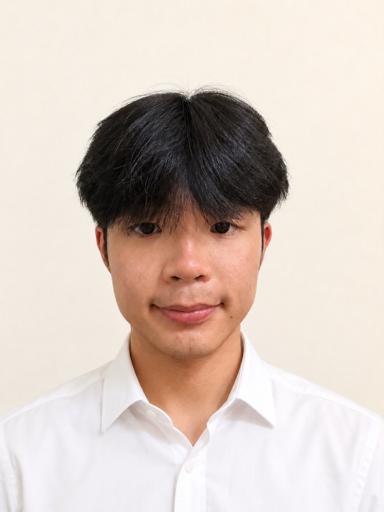
Lloyd, NUS Business
Credentials: NUS Business Administration | Eunoia JC Graduate | A-Level Distinctions in H2 Math, H2 Chemistry, H1 Biology, GP
Specialises in: NUS Business Student, A-Level High Achiever, Primary Foundation Building, Secondary Subject Mastery, Effective Study Strategies
Track record: 3 Years
A note from Lloyd: "From Eunoia JC Excellence to NUS Success My academic journey from Eunoia Junior College to securing a coveted place at NUS Business School taught me the exact strategies needed for academic excellence. I achieved Distinctions across H2 Mathematics, H2 Chemistry, H1 Biology, and General Paper, placing me in the top tier of A-Level graduates."
Read more
More about LloydShow less
Real results from our tutors' students
O Level Combined Chem/Bio
Ng Qi Lin, St Margaret's Sec
O Level Chem/Phy
Siddarth, Yishun Town Sec
O Level Combined Bio/Chem
Joey Sao, Tanglin Sec
Reviews on Google
5.0 average on our Google Business Profile. Read them on Google
The whole process was hassle-free, and Alicia matched me with a tutor really quickly. Super satisfied with the service.
The tutor catalogue is super detailed, so I knew exactly who I was choosing. Really liked that.
Google review
My tutor explains everything clearly and is really patient. I actually enjoy the lessons now.
Google review
Been matched with a tutor through us? Leave a review on Google
O-Level Pure Chemistry: frequently asked questions
What does O-Level Pure Chemistry cover?
Syllabus 6092 covers the mole concept and stoichiometry, atomic structure and bonding, acids and bases, redox, the periodic table, organic chemistry and qualitative analysis.
Which topic is most important in O-Level Chemistry?
The mole concept and stoichiometry, introduced in Sec 3, it underpins titration, reacting masses and most quantitative questions through to O-Level.
How is Pure Chemistry assessed?
Three papers: multiple choice (40 marks), structured and free response (80 marks) and a practical exam (40 marks), reported as one grade.
O-Level Pure Chemistry and the H2 Chemistry Route
Pure Chemistry is the usual route into H2 Chemistry at JC, which Medicine, Dentistry and Pharmacy courses require.