O-Level and SEC Biology Study Guide
Syllabus 6093 and SEC G3 K325: cells, transport, genetics and Free Response practice for Sec 3 and Sec 4
Get matched with a tutor
★★★★★
Alicia is very efficient at matching good tutors to my children and the tutor catalog sent is very detailed. They are professional, responsible and my kids love them a lot.
The grade, explained
How O-Level and SEC grades turn into points
JC admission adds English and the best relevant subjects. Fewer points is better. From the 2028 PSE, JC needs an L1R4 of 16 or below, every subject at G3.
- A11 point
- A22 points
- B33 points
- B44 points
- C55 points
- C66 points
- D77 points
- E88 points
- F99 points
Source: MOE Post-Secondary Admissions Exercise (PSE), JC and MI criteria.
O-Level Pure Biology in brief
O-Level Pure Biology (code 6093) is the third pure-science subject and the usual route into H2 Biology at JC, a common choice for students aiming at Medicine, Dentistry, Pharmacy and life-science courses. The format is three papers. Paper 1 is multiple-choice (40 marks, 1 hour). Paper 2 is structured questions plus a free-response section (80 marks, 1 hour 45 minutes). Paper 3 is a practical exam (40 marks, 1 hour 50 minutes).
Read the full guide
The 6093 syllabus covers cells and biological molecules, enzymes, nutrition (in humans and plants), transport (in humans and plants), respiration, excretion, homeostasis, the nervous system, reproduction (sexual and asexual), inheritance and genetics, ecosystems and human impact. The dominant gap-creators are diagram-based answer techniques (especially labelling cells, organs, and process diagrams), genetics problem solving (genetic diagrams for monohybrid crosses, codominance and the ABO blood groups), and Free Response keyword discipline.
Our O-Level Pure Biology tutors run a structured Sec 3 to Sec 4 programme. The Sec 3 syllabus covers cells, biological molecules, enzymes, nutrition and transport in humans and plants. The Sec 4 syllabus then layers respiration, excretion, homeostasis, reproduction, genetics and ecology. Tutors range from experienced full-time tutors to NUS or NTU graduates with Life Sciences, Biomedical Sciences or related majors, and each profile on your shortlist states the tutor's background.
The genetics question on Paper 2 is a regular feature and a very teachable topic. The pattern is a genetic diagram problem (a monohybrid cross, codominance or the ABO blood groups) with a conclusion phrasing requirement. Lessons teach a systematic approach (define the alleles with explicit notation, set up parental genotypes, draw the Punnett square neatly, compute the ratio, then phrase the conclusion as "the probability that the offspring shows the recessive trait is 1 in 4"). Our tutors drill genetics past-paper questions across the year, including codominance and ABO blood group questions, alongside the diagram-labelling technique on the digestive, circulatory and excretory system questions.
The 6093 assessment structure in full: Paper 1 is 40 multiple-choice questions in 1 hour, worth 30 percent of the final grade. Paper 2 is 1 hour 45 minutes and worth 50 percent, split into Section A (70 marks of structured questions, ending with one free-response question and one data-based question) and Section B (10 marks, one free-response question chosen from two). Paper 3 is the 1-hour-50-minute practical, worth the remaining 20 percent. Two planning consequences follow from this weighting.
First, Paper 2 carries half the grade, which is why answer phrasing and mark-allocation discipline are where our lessons spend disproportionate time. Second, the practical paper is worth 20 percent on its own, and the skills it tests (drawing, magnification calculations, food tests, experimental design) can be practised in dedicated sessions.
On the topical side, the heaviest-weighted question clusters in recent papers sit in transport in humans and plants, homeostasis and the nervous system, and inheritance, so a revision plan that front-loads those three blocks covers a large share of the marks. Looking past 2026: the final O-Level sitting for 6093 is November 2026, and from 2027 Pure Biology runs under the Singapore-Cambridge SEC as a G3 subject with code K325, with the same grade bands at G3 and the same content spine, so this guide applies to both cohorts.
Key dates: the last O-Level and the first SEC
- Mid-October to mid-November 2026The last O-Level written papersMother Tongue written papers also have a mid-year sitting.
- 13 to 15 January 20272026 O-Level results (tentative)Used for the 2027 JAE, which still counts L1R5.
- September 2027First SEC: English and Mother Tongue written papers
- From October 2027SEC: all other written papers
- Mid-January 2028SEC resultsPost-secondary applications open for 6 days from results day.
Show the full timelineShow less
O-Level Pure Biology tuition rates
Real ranges by level and tutor tier. We re-match free if the fit is wrong.
| Level | Part-time / undergrad | Full-time | Ex-MOE or NIE-trained |
|---|---|---|---|
| Lower Secondary (Sec 1-2) | S$35-50/hr | S$50-65/hr | S$60-80/hr |
| Upper Secondary / O-Level (Sec 3-4) | S$45-60/hr | S$55-75/hr | S$70-95/hr |
Final rate is set on tutor match and depends on tutor tier, level and lesson frequency. See full pricing page.
Full rate guide · O-Level Pure Biology tuition: rates and tutors
Official syllabus: SEAB, GCE O-Level overview
Common O-Level Pure Biology Struggles We Fix
Pure Biology marks at the A1 and A2 bands are decided on diagram-based answers and Free Response keyword discipline. The patterns we see most often:
Diagrams (cell structure, digestive system, kidney nephron) are partially labelled or labels are positioned incorrectly.
Process explanations (active transport, photosynthesis, respiration) are conceptually correct but use wrong vocabulary.
Genetics Punnett-square questions are calculated correctly but the conclusion phrasing loses marks.
Confuses similar processes (osmosis vs diffusion, transpiration vs translocation).
2 more
Cannot link cross-topic questions (for example a question that spans nutrition, transport and respiration in one scenario).
Free Response answers are too short or too long for the mark allocation.
These are the gaps our O-Level Pure Biology tutors fix with structured topical sequencing and weekly Free Response drilling.
O-Level Pure Biology Programme Structure
A 6093-aligned topical programme spanning Sec 3 to Sec 4:
Cells, Molecules, Enzymes (foundation)
The Sec 3 building blocks for everything downstream.
Topics covered
- Cell structure (animal and plant) and organelle functions
- Diffusion, osmosis, active transport
- Biological molecules (carbohydrates, proteins, lipids)
- Enzymes (mode of action, factors affecting activity)
- Cell division (mitosis, brief meiosis)
Nutrition and Transport
High-frequency topic block with diagram emphasis.
Topics covered
- Nutrition in humans (digestive system, digestion, absorption)
- Nutrition in plants (photosynthesis, leaf structure)
- Transport in humans (heart, blood vessels, blood)
- Transport in plants (xylem, phloem, transpiration)
- Diagram labelling techniques for the digestive and circulatory systems
Respiration, Excretion, Homeostasis
Process-heavy topics where keyword discipline matters.
Topics covered
- Aerobic and anaerobic respiration
- Excretion (kidney structure, nephron function)
- Homeostasis (blood glucose, body temperature)
- Nervous system (neurones, reflex arc)
- Hormonal control (insulin, adrenaline)
Reproduction, Genetics, Ecology
The Sec 4 capstone topics.
Topics covered
- Sexual and asexual reproduction
- Human reproduction and development
- Inheritance (Mendel laws)
- Genetic diagrams (monohybrid crosses, codominance, ABO blood groups)
- DNA, genes and genetic engineering basics
- Ecosystems, food chains, food webs
- Human impact on ecosystems
Why parents pick us
6093-Specialist Tutors
We shortlist tutors whose profiles show Pure Biology teaching experience. Lessons work to the SEAB Free Response marking rubric vocabulary.
Diagram-Based Answer Techniques
Diagrams account for a significant portion of Paper 2 marks. We drill labelling conventions, arrow conventions and explanation accompaniment.
Genetics Problem-Solving Drilling
Genetics brings calculation-style questions into Pure Biology. We drill Punnett squares to automaticity.
Biology topic by topic
Notes, a worked example and practice questions for each topic.
Meet one of our O-Level Pure Biology tutors
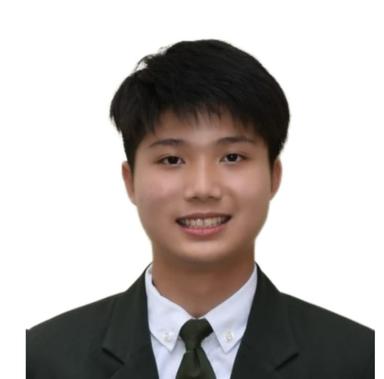
Denzel Tan, Lead Science Specialist Catalyst
Credentials: Undergraduate in Biology | Mentored by Dion | Sciences Specialist
Specialises in: Student-Centric Approach, Concept Mastery, Question Encouragement, Supportive Environment, Confidence Building
Track record: 3 Years
A note from Denzel: "Academic Excellence & Expert Training Currently pursuing my Biology degree while serving as Lead Science Specialist, I bring both academic rigor and practical teaching expertise to every lesson. This unique combination of ongoing academic study and expert-guided teaching experience ensures I understand both current curriculum demands and effective learning strategies."
Read more
More about DenzelShow less
Real results from our tutors' students
O Level Combined Chem/Bio
St Margaret's Sec
O Level Combined Bio/Chem
Tanglin Sec
Reviews on Google
4.9 average on our Google Business Profile. Read them on Google
Really happy with my tutor from TSS. The lessons are easy to understand, and the study materials they provide are actually useful.
My tutor is always on time, well-prepared, and makes difficult topics much easier to understand.
Etude Romantic · Google review
Alicia was really responsive and matched me with a tutor so quickly. The whole process was smooth.
Lee Gavin · Google review
Been matched with a tutor through us? Leave a review on Google
O-Level Pure Biology: frequently asked questions
What does O-Level Pure Biology cover?
Syllabus 6093 covers cells and transport, nutrition, respiration, the human body systems, genetics, reproduction and ecology.
How is Pure Biology examined?
Three papers: multiple choice (40 marks), structured and free response (80 marks) and a practical exam (40 marks), reported as one grade.
Is O-Level Biology mostly memorisation?
Recall is necessary, but the higher marks come from applying concepts to unfamiliar data and writing precise, command-word-correct answers.
O-Level Pure Biology and the Life-Science Route
Pure Biology is the usual route into H2 Biology at JC, a common subject for students aiming at medical and life-science university courses.