PSLE Chinese Syllabus & Study Guide
Standard and Higher Chinese for P5 and P6, both coached
Get matched with a tutor
★★★★★
TSS stands out compared to other agencies I’ve tried. Everything was smooth from finding a tutor to starting lessons.
The grade, explained
How PSLE Achievement Levels work
Each subject gets an AL from 1 (best) to 8. The four ALs add up to the PSLE score, from 4 to 32.
- AL190 and above
- AL285 to 89
- AL380 to 84
- AL475 to 79
- AL565 to 74
- AL645 to 64
- AL720 to 44
- AL8Below 20
Source: MOE PSLE scoring.
PSLE Chinese in brief
PSLE Chinese (普通华文) has three papers. Paper 1 is composition (40 marks, 20 percent), Paper 2 is language use and comprehension (90 marks, 45 percent), and Paper 3 covers oral (50 marks, 25 percent) and listening comprehension (20 marks, 10 percent). Higher Chinese (高级华文) has its own paper structure and is taken in addition by eligible students in many primary schools, not only SAP schools. The dominant gap-creator across both standards is composition.
Read the full guide
The PSLE Chinese composition (看图作文) gives a series of pictures and a partial scenario, and students must write a story that demonstrates language range, plot construction and character motivation. Students who plateau at AL5 often have one of three issues: vocabulary range too narrow (the same words appearing in every composition), grammar mistakes that compound under exam time pressure, or weak oral conversation that pulls down the Oral mark.
Our PSLE Chinese tutors run a structured weekly programme that combines composition practice, comprehension drilling and oral coaching. Composition work focuses on theme-recognition (each year's PSLE composition has a recognisable thematic family: friendship, perseverance, family conflict, helping others), plot-structure templates (problem, escalation, climax, resolution, reflection), and vocabulary expansion using the SEAB-recommended word list plus topic-specific vocabulary banks. Comprehension drilling emphasises Open-Ended question types (factual recall, inferential, vocabulary in context). Oral coaching covers planned reading (intonation, pacing, expression) and stimulus-based conversation (frame your view, give a reason, offer a personal example). Tutors range from experienced full-time tutors to graduates from strong Chinese-language backgrounds.
For students from English-dominant home environments (a common pattern in Punggol, Sengkang and Bukit Timah), the binding constraint is not grammar but vocabulary range and idiom familiarity. PSLE Chinese composition rewards specific Chinese phrasing: the four-character idioms (chengyu), the descriptive verbs that English-leaning students never see at home, and the rhythmic sentence variety that comes only from regular Chinese reading. Our tutors can run a parallel weekly chengyu and descriptive-verb programme alongside composition practice. For students taking Higher Chinese we also coach the Higher Chinese paper alongside Standard Chinese. The two are taught in parallel and book one slot per week each.
PSLE Chinese tuition rates
Real ranges by level and tutor tier. We re-match free if the fit is wrong.
| Level | Part-time / undergrad | Full-time | Ex-MOE or NIE-trained |
|---|---|---|---|
| Lower Primary (P1-P4) | S$30-40/hr | S$40-55/hr | S$50-65/hr |
| Upper Primary / PSLE (P5-P6) | S$35-50/hr | S$45-60/hr | S$55-75/hr |
Final rate is set on tutor match and depends on tutor tier, level and lesson frequency. See full pricing page.
Full rate guide · PSLE Chinese tuition: rates and tutors
Official syllabus: MOE, Mother Tongue Languages · SEAB, PSLE Chinese syllabus
Common PSLE Chinese Struggles We Fix
PSLE Chinese at AL3 and above bands is decided on composition content quality and oral fluency. The patterns we see most often:
Composition stays at the band 3 mark range because vocabulary is repetitive, plots are flat, and figurative language is absent.
Open-Ended comprehension answers are partially correct but lift directly from the passage rather than paraphrasing.
Grammar errors compound under composition time pressure (incorrect particle usage, run-on sentences, mixed verb tenses).
Oral planned reading is choppy or monotone, capping the mark.
2 more
Stimulus-based oral conversation lacks structure, making the answer feel rambling.
Listening comprehension scores drop on the second-half questions where information density rises.
Our PSLE Chinese programme drills these specific areas with structured weekly skill-targeting and detailed composition feedback in Chinese.
PSLE Chinese Programme Structure
A three-paper programme weighted toward composition and oral, with separate Higher Chinese coaching available:
Composition (作文)
Theme recognition, plot structure templates, vocabulary expansion.
Topics covered
- PSLE composition theme families (friendship, perseverance, family, helping others)
- Plot structure (起承转合)
- Character development and dialogue (人物对话)
- Vocabulary expansion by topic banks
- Figurative language (比喻、拟人、夸张)
- Sentence variety and rhythm
Comprehension (阅读理解)
Booklet A and Booklet B coverage, with Open-Ended drilling.
Topics covered
- Factual recall (paraphrase rather than lift)
- Inferential comprehension (evidence-then-inference)
- Vocabulary in context
- Visual text (notices, infographics)
- Synthesis and editing
Oral (口试)
Planned reading and stimulus-based conversation.
Topics covered
- Planned reading intonation, pacing, expression
- Stimulus-based conversation framework (观点、原因、例子)
- Common conversation prompts (school life, family, social topics)
- Confidence drills and elocution
- Recovery techniques when the planned response stalls
Higher Chinese (高级华文)
Separate coaching track for SAP-track students.
Topics covered
- Higher Chinese composition style (more demanding vocabulary and structure)
- Classical Chinese passages (文言文 introduction)
- Comprehension at the higher band
- SAP-school topical CA alignment
- Bicultural Studies pathway preparation (for top SAP students)
Why parents pick us
Lessons and Feedback in Chinese
Lessons are taught in Chinese, and composition feedback is given in Chinese, which models the writing style for the student.
Standard and Higher Chinese
We coach both Standard PSLE Chinese and Higher Chinese. For SAP-track students, we shortlist tutors whose profiles show Higher Chinese teaching experience.
Composition Feedback Discipline
Every composition the student writes gets line-by-line tutor feedback in Chinese. Generic comments do not lift content marks. Specific feedback on plot pacing, vocabulary range and grammar precision does.
Meet one of our PSLE Chinese tutors
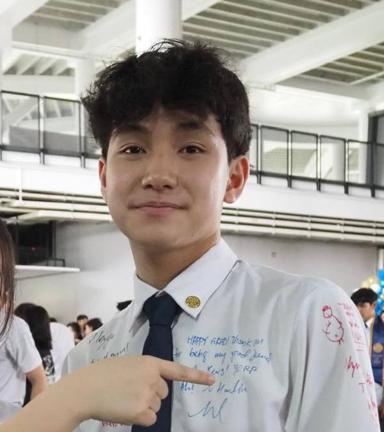
Pang, NUS Chemistry Undergraduate
Credentials: A Level Graduate
Specialises in: PSLE Prep, IP Secondary School, JC H2 Chemistry, IP Chemistry, Primary School Science, O Level Chinese, O Level Higher Chinese, A Level H1 Chinese
Track record: 2 Years
A note from Pang: "Hi, I am haoyu and I believe that practice makes perfect and interest comes with proficiency. I used to score Cs and Ds back when I was in secondary 3. I managed to pull my grades up to Bs and As."
Read more
More about PangShow less
Reviews on Google
5.0 average on our Google Business Profile. Read them on Google
Alicia is very efficient at matching good tutors to my children and the tutor catalog sent is very detailed. They are professional, responsible and my kids love them a lot.
The tutor catalogue made it super easy to choose a tutor, and Alicia was really helpful throughout the whole process. Definitely recommend TSS.
Giselle Tay · Google review
tutors who teach with heart and seamless process, love their curated shortlist and in-house materials TSS is a W 👍🏻
Gwen Tan · Google review
Been matched with a tutor through us? Leave a review on Google
PSLE Chinese: frequently asked questions
What does PSLE Chinese cover?
PSLE Chinese spans writing, language use and comprehension, listening and oral. It is a Mother Tongue subject and counts toward the four-subject PSLE Score.
Should my child take Higher Chinese?
Higher Chinese is not part of the PSLE Score. Students who do well in it get posting priority to SAP schools.
How can PSLE Chinese improve fastest?
Sustained Chinese reading between practice sessions, vocabulary and comprehension respond more to consistent exposure than to lesson hours alone.
Start PSLE Chinese Tuition Early for Composition
Composition skills build slowly, so an early start helps.