Secondary 4 Chemistry Tuition Singapore
The SEC exam year for Chemistry: redox, organic chemistry, rates and timed papers through 2027.
Sec 4 Chemistry tuition in Singapore for the 2027 SEC G3 Chemistry (K324) papers: mole work, organic chemistry, QA and the practical.
 Reviewed by Theon Teo, Founder · Updated
Request a Sec 4 Chemistry tutor


- Typical rate
- S$35 to S$95/hr
- Your shortlist
- 3 to 12 tutors in 16h
- Wrong fit?
- Free re-match
Free now: school exam papers, formula sheets and topic guides, all in our free resources.
★★★★★
My tutor is always on time, well-prepared, and makes difficult topics much easier to understand.
More reviews, 4.9 average on Google
Reviews on Google
4.9 average on our Google Business Profile. Read them on Google
TSS stands out compared to other agencies I’ve tried. Everything was smooth from finding a tutor to starting lessons.
Tss is very outstanding compared to other tuition centre as they are very patient with the engagement i had with them.
xinyu · Google review
I’ve tried other tuition agencies before, but TSS is definitely the one I’d recommend. The service is much better.
Darius Campbell · Google review
Easy to start, easy to stop
- No contractNo contract and no minimum number of lessons.
- You choose the tutorWe send a shortlist of tutor profiles. You pick who teaches.
- The first lesson is a trialIt is a paid lesson at the tutor's rate, so you see the fit before you go on.
- Wrong fit? Free re‑matchIf the fit is wrong, we find another tutor at no charge.
- 24 hours to move a lessonCancel or reschedule at least 24 hours ahead, or that lesson is charged.
 No contract
 You choose the tutor
 The first lesson is a trial
 Wrong fit? Free re‑match
 24 hours to move a lesson
What changes from 2027

- From 2027 the O-Level, N(A) and N(T) Level exams become one, the Singapore-Cambridge Secondary Education Certificate (SEC). Each subject is sat at G1, G2 or G3. The SEC explained.
- G3 keeps the A1 to 9 grades, G2 is graded 1 to 6 and G1 is graded A to E. How SEC grades and points work.
- From 2028 JC, polytechnic and ITE admissions become one Post-Secondary Admissions Exercise (PSE). JC entry uses an L1R4 of 16 or below, all at G3. The PSE 2028 explained.
Tell us your child's subject level, G1, G2 or G3, and we shortlist tutors who teach that level.
Show all three changesShow less
Results our tutors have helped with

C6 to A1
Danial, Serangoon Sec
E8 to A1
Jaden, Ahmad Ibrahim Sec
F9 to B3
Shermaine, Woodlands Sec
D7 to A1
Geoff, Presbyterian High
D7 to A1
Lionel, Assumption English Sec
F9 to B3
Zong En, Fuhua Sec
Secondary 4 Chemistry Tuition rates in Singapore
Hourly rates for Secondary 3 to 4, by type of tutor.
The same rates as a table
| Level | Part-time / undergrad | Full-time | Ex-MOE teacher |
|---|---|---|---|
| Upper Secondary / O-Level (Sec 3-4) | S$35-45/hr | S$45-65/hr | S$65-95/hr |
The final rate is set when you choose a tutor. See all tuition rates for 2027.
What costs marks in Sec 4 Chemistry
In the exam year, Chemistry questions mix topics, and small slips carry through whole questions.
Electrolysis products are guessed instead of predicted from selective discharge and the reactivity series.
Titration answers forget the mole ratio, so sulfuric acid is treated as reacting one to one with sodium hydroxide.
Organic questions mix up addition and substitution, or draw esters with the wrong alcohol and acid parts.
Qualitative analysis answers name the ion but do not quote the observation that proves it.
1 more
Energy profile diagrams leave out the activation energy or put the products above the reactants for an exothermic reaction.
These are the patterns a tutor looks for when marking Sec 4 practice papers.
The later topics of the G3 Chemistry syllabus
Schools set their own order across the two years, so this is the second half of the syllabus in SEAB's order, not a fixed Sec 4 list. The exam covers all 12 topics, and revision of Sec 3 work runs alongside.
Acids, bases and qualitative analysis
Reactions of acids and bases, and identifying unknown substances.
Topics covered
- Strong and weak acids and pH
- Preparing salts and the solubility rules
- Ammonia manufacture and reversible reactions
- Testing cations with aqueous sodium hydroxide and ammonia
- Tests for anions and gases
- Classifying oxides as acidic, basic, amphoteric or neutral
Redox and electrochemistry
Oxidation states, electrolysis and cells.
Topics covered
- Redox by oxygen, hydrogen, electrons and oxidation state
- Testing for oxidising and reducing agents
- Electrolysis of molten and aqueous compounds
- Selective discharge of ions
- Purifying copper and electroplating
- Simple cells and hydrogen as a fuel
The Periodic Table, energetics and rates
Patterns across the table, energy changes and the speed of reactions.
Topics covered
- Trends across periods and down Groups 1, 17 and 18
- Transition elements as catalysts
- The reactivity series, rusting and sacrificial protection
- Exothermic and endothermic changes and bond energies
- Energy profile diagrams and activation energy
- Factors affecting rate, and catalysts including enzymes
Organic chemistry and air quality
Carbon compounds, polymers and the chemistry of the atmosphere.
Topics covered
- Crude oil, fractional distillation and biofuels
- Alkanes, alkenes, isomers and cracking
- Alcohols, carboxylic acids and esters
- Addition and condensation polymers, and recycling plastics
- Air pollutants, catalytic converters and acid rain
- The carbon cycle and greenhouse gases
Some of our Sec 4 Chemistry tutors
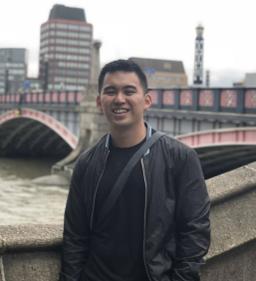
Dion TanCatalyst Maths and Science
Qualifications: Masters’s Degree of Science (NUS) | Bachelor's Degree of Chemistry and Biological Chemistry (NTU)
Experience: 11 Years
See Dion Tan's profile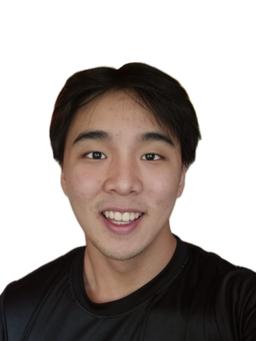
KoenIB High Achiever 43/45
Qualifications: IB Score: 43/45 | ACS (Independent) Class of 2023 | NUS Dentistry Undergraduate
Experience: 4 Years
See Koen's profile
OngTop 10% Pharmacy Student
Qualifications: Pharmacy Student | A-Levels: 4 A's and 2 B's | Understanding Over Memorization Specialist
Experience: 3 Years
See Ong's profile
The G3 Chemistry papers in the 2027 SEC
All three papers are compulsory. This is SEAB's scheme of assessment for G3 Chemistry, syllabus K324.
The 2026 O-Level Chemistry 6092 syllabus sets out the same three papers, so the format your child's school has practised for years still applies.
| Paper | What it contains | Time and marks | Weighting |
|---|---|---|---|
| Paper 1, Multiple Choice | 40 compulsory multiple-choice items, with the Periodic Table printed. | 1 h, 40 marks | 30% |
| Paper 2, Structured and Free Response | Section A: compulsory structured questions for 70 marks. The last two carry 20 marks, one a data-based question worth 8 to 12 marks. Section B: answer one of two questions for 10 marks. The Periodic Table is printed. | 1 h 45 min, 80 marks | 50% |
| Paper 3, Practical | A variable number of compulsory practical questions, which may include planning. The Notes for Qualitative Analysis are printed. | 1 h 50 min, 40 marks | 20% |
Sources and notes (4)
SEAB, G3 Chemistry syllabus K324 for the 2027 SEC. Open the K324 PDF.
SEAB, O-Level Chemistry 6092 syllabus for 2026. Open the 6092 PDF.
SEAB, the SEC and its G1, G2 and G3 grades. Read the SEAB page.
More on the Chemistry papers is on our O-Level and SEC Chemistry tuition page.
Show the tableShow less
Sec 4 Chemistry through 2027
A sample plan on the 2027 school terms. The tutor changes the order to follow the school and your child's test results.
- Term 1: 4 Jan to 12 Mar 2027Secure the calculation coreFormulae, ionic equations and the mole, revisited until every Sec 3 calculation type is reliable.
- Term 2: 22 Mar to 28 May 2027Redox and organic chemistryElectrolysis predictions, then organic families and reactions, alongside the school's topics.
- June holidays: 29 May to 27 Jun 2027Mixed-topic papersTimed Paper 2 practice where one question spans several topics, then careful review.
- Term 3: 28 Jun to 3 Sep 2027Practical and QATitration results, planning answers and qualitative analysis with the printed notes.
- Term 4: from 13 Sep 2027Exam weeksShort reviews of the weakest topics before the common SEC exam period in October.
- January 2028ResultsSEC results come out in January, the month after the exam year ends.
MOE school terms for 2027. See the 2027 calendar.
MOE on the SEC exam period and results release. Read the MOE infosheet.
Show the timelineShow less
Before you book a Sec 4 Chemistry tutor
What parents ask when Chemistry help is needed in the exam year.
| Question | For Secondary 4 |
|---|---|
| Which tutor suits Sec 4 Chemistry? | Choose a tutor who works through mixed-topic papers and knows the qualitative analysis notes well. For a late start, a full-time tutor or an ex-MOE teacher who has taught Sec 4 recently is a sound choice. Each profile we send covers the tutor's qualifications, experience and teaching levels. |
| What does it cost? | Upper Secondary rates apply: S$35 to S$45 an hour with an undergraduate tutor, S$45 to S$65 with a full-time tutor and S$65 to S$95 with an ex-MOE teacher. Four 2-hour lessons a month with an ex-MOE teacher come to S$520 to S$760. |
| How does it start? | Send the school, the latest Chemistry result and the weakest topics. We send 3 to 12 tutor profiles within 16 hours. The first lesson is a paid trial at the tutor's hourly rate. |
| What are the terms? | No contract and no minimum, so tuition can end with the last paper. Cancel or move a lesson at least 24 hours ahead, or it is charged. If the fit is wrong, we re-match you free. |
Show the tableShow less
Secondary 4 Chemistry Tuition: a guide for parents
Sec 4 Chemistry students in 2027 are the first to sit the SEC, which replaces the O-Level from that year. Chemistry at G3 carries the code K324. Set side by side, SEAB's 2027 K324 syllabus and the 2026 O-Level Chemistry 6092 syllabus have the same twelve topics, the same learning outcomes and the same three papers. Past O-Level Chemistry papers are still the right practice material. The written papers sit in the common SEC exam period, which MOE has set to begin in October, and results are released in January of the following year. Grades are on the G3 scale of A1 to 9.
In Sec 4 the school usually finishes the later topics while the earlier ones must stay fresh, and Chemistry questions mix them freely. One Paper 2 question can start with electrolysis, ask for an ionic equation, and end with a mole calculation. A Sec 4 Chemistry tutor revises across topics instead of one chapter at a time, and keeps a running list of your child's weak links, such as the mole, ionic equations or organic reactions. Qualitative analysis is practised with the printed Notes for Qualitative Analysis, so your child learns to read observations against the table quickly. The aim is steady, timed accuracy across every topic in the syllabus.
A typical Sec 4 titration question: 25.0 cm³ of aqueous sodium hydroxide is exactly neutralised by 20.0 cm³ of 0.100 mol/dm³ sulfuric acid. Find the concentration of the sodium hydroxide. The equation is H₂SO₄ + 2NaOH gives Na₂SO₄ + 2H₂O. Moles of acid = 0.100 × 20.0 ÷ 1000 = 0.00200 mol. The ratio is 1 : 2, so moles of NaOH = 0.00400 mol, and the concentration is 0.00400 ÷ 0.0250 = 0.160 mol/dm³.
Many students skip the ratio and get 0.080 mol/dm³, or forget to convert cm³ to dm³. A tutor has your child write the equation first, circle the ratio, and keep units on every line, which is also how titration results are processed in the practical paper.
Official syllabus: MOE Singapore · SEAB Singapore

Secondary 4 Chemistry Tuition: frequently asked questions
Does SEC Chemistry change the syllabus or the papers?
No, for G3 Chemistry. SEAB's 2027 K324 syllabus has the same twelve topics, learning outcomes, papers and weightings as O-Level Chemistry 6092 in 2026. What changes is the name, the code and the certificate, with the G3 grade reported from A1 to 9. Your child's school past papers and older O-Level papers remain valid practice.
How much does Secondary 4 Chemistry tuition cost?
Sec 4 Chemistry is in our Upper Secondary band: S$35 to S$45 an hour for an undergraduate tutor, S$45 to S$65 for a full-time tutor and S$65 to S$95 for an ex-MOE teacher. Families who start late in Sec 4 often book 2-hour lessons so a full Paper 2 section can be done and reviewed in one sitting.
What is printed in the Chemistry exam papers?
A copy of the Periodic Table of Elements is printed in Paper 1 and Paper 2. The Notes for Qualitative Analysis are printed in Paper 3, the practical. Students do not need to memorise every test result, but they do need to read the notes quickly and match observations correctly. A tutor practises with the notes in hand, as in the exam.
How is the Chemistry practical paper set?
Paper 3 is 1 h 50 min for 40 marks and carries 20% of the grade. It has a variable number of compulsory practical questions, and one or more may assess planning. Some data-analysis questions need no apparatus. Notes, textbooks and other references are not allowed. A tutor can drill the written parts: recording results, titration calculations and planning answers.

Get started with Secondary 4 Chemistry Tuition
Tell us your child's school, level and target exam timeline.