Free resource · PSLE (Primary 5 and 6)
PSLE Chinese Composition Phrases (好词好句): Free PDF
Strong PSLE Chinese compositions describe feelings, actions, settings and sounds with precise words and end with a short reflection. This phrase bank groups useful words and four-character idioms by theme, each with Hanyu Pinyin, an English meaning and an example sentence. The last section gives sentence starters for the oral conversation.
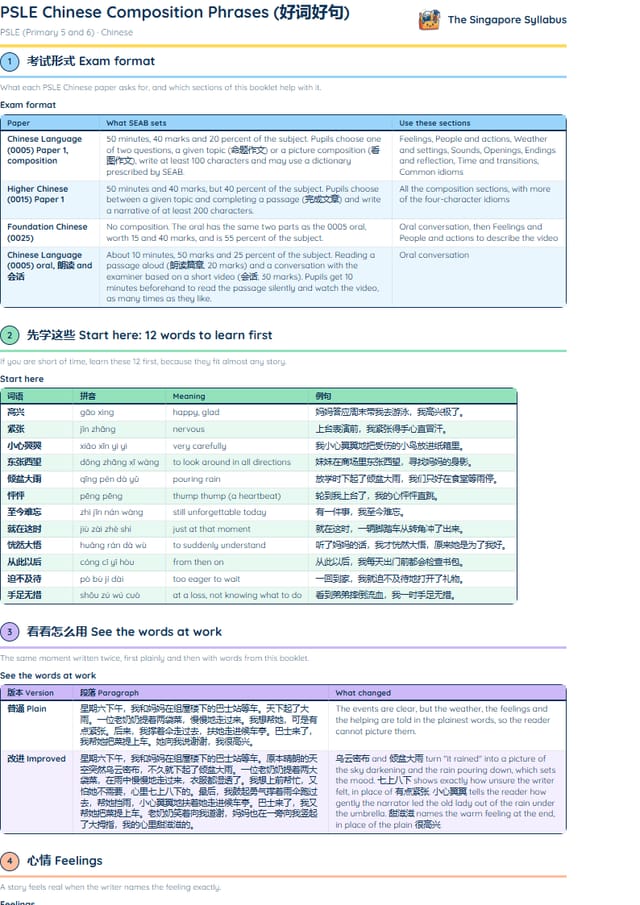
考试形式 Exam format
What each PSLE Chinese paper asks for, and which sections of this booklet help with it.
| Paper | What SEAB sets | Use these sections |
|---|---|---|
| Chinese Language (0005) Paper 1, composition | 50 minutes, 40 marks and 20 percent of the subject. Pupils choose one of two questions, a given topic (命题作文) or a picture composition (看图作文), write at least 100 characters and may use a dictionary prescribed by SEAB. | Feelings, People and actions, Weather and settings, Sounds, Openings, Endings and reflection, Time and transitions, Common idioms |
| Higher Chinese (0015) Paper 1 | 50 minutes and 40 marks, but 40 percent of the subject. Pupils choose between a given topic and completing a passage (完成文章) and write a narrative of at least 200 characters. | All the composition sections, with more of the four-character idioms |
| Foundation Chinese (0025) | No composition. The oral has the same two parts as the 0005 oral, worth 15 and 40 marks, and is 55 percent of the subject. | Oral conversation, then Feelings and People and actions to describe the video |
| Chinese Language (0005) oral, 朗读 and 会话 | About 10 minutes, 50 marks and 25 percent of the subject. Reading a passage aloud (朗读篇章, 20 marks) and a conversation with the examiner based on a short video (会话, 30 marks). Pupils get 10 minutes beforehand to read the passage silently and watch the video, as many times as they like. | Oral conversation |
先学这些 Start here: 12 words to learn first
If you are short of time, learn these 12 first, because they fit almost any story.
| 词语 | 拼音 | Meaning | 例句 |
|---|---|---|---|
| 高兴 | gāo xìng | happy, glad | 妈妈答应周末带我去游泳,我高兴极了。 |
| 紧张 | jǐn zhāng | nervous | 上台表演前,我紧张得手心直冒汗。 |
| 小心翼翼 | xiǎo xīn yì yì | very carefully | 我小心翼翼地把受伤的小鸟放进纸箱里。 |
| 东张西望 | dōng zhāng xī wàng | to look around in all directions | 妹妹在商场里东张西望,寻找妈妈的身影。 |
| 倾盆大雨 | qīng pén dà yǔ | pouring rain | 放学时下起了倾盆大雨,我们只好在食堂等雨停。 |
| 怦怦 | pēng pēng | thump thump (a heartbeat) | 轮到我上台了,我的心怦怦直跳。 |
| 至今难忘 | zhì jīn nán wàng | still unforgettable today | 有一件事,我至今难忘。 |
| 就在这时 | jiù zài zhè shí | just at that moment | 就在这时,一辆脚踏车从转角冲了出来。 |
| 恍然大悟 | huǎng rán dà wù | to suddenly understand | 听了妈妈的话,我才恍然大悟,原来她是为了我好。 |
| 从此以后 | cóng cǐ yǐ hòu | from then on | 从此以后,我每天出门前都会检查书包。 |
| 迫不及待 | pò bù jí dài | too eager to wait | 一回到家,我就迫不及待地打开了礼物。 |
| 手足无措 | shǒu zú wú cuò | at a loss, not knowing what to do | 看到弟弟摔倒流血,我一时手足无措。 |
看看怎么用 See the words at work
The same moment written twice, first plainly and then with words from this booklet.
| 版本 Version | 段落 Paragraph | What changed |
|---|---|---|
| 普通 Plain | 星期六下午,我和妈妈在组屋楼下的巴士站等车。天下起了大雨。一位老奶奶提着两袋菜,慢慢地走过来。我想帮她,可是有点紧张。后来,我撑着伞走过去,扶她走进候车亭。巴士来了,我帮她把菜提上车。她向我说谢谢,我很高兴。 | The events are clear, but the weather, the feelings and the helping are told in the plainest words, so the reader cannot picture them. |
| 改进 Improved | 星期六下午,我和妈妈在组屋楼下的巴士站等车。原本晴朗的天空突然乌云密布,不久就下起了倾盆大雨。一位老奶奶提着两大袋菜,在雨中慢慢地走过来,衣服都湿透了。我想上前帮忙,又怕她不需要,心里七上八下的。最后,我鼓起勇气撑着雨伞跑过去,帮她挡雨,小心翼翼地扶着她走进候车亭。巴士来了,我又帮她把菜提上车。老奶奶笑着向我道谢,妈妈也在一旁向我竖起了大拇指,我的心里甜滋滋的。 | 乌云密布 and 倾盆大雨 turn "it rained" into a picture of the sky darkening and the rain pouring down, which sets the mood. 七上八下 shows exactly how unsure the writer felt, in place of 有点紧张. 小心翼翼 tells the reader how gently the narrator led the old lady out of the rain under the umbrella. 甜滋滋 names the warm feeling at the end, in place of the plain 很高兴. |
心情 Feelings
A story feels real when the writer names the feeling exactly.
| 词语 | 拼音 | Meaning | 例句 |
|---|---|---|---|
| 高兴 | gāo xìng | happy, glad | 妈妈答应周末带我去游泳,我高兴极了。 |
| 兴高采烈 | xìng gāo cǎi liè | very happy and excited | 听说明天去动物园,弟弟兴高采烈地跳了起来。 |
| 心花怒放 | xīn huā nù fàng | overjoyed, bursting with happiness | 看到成绩单上的分数,我顿时心花怒放。 |
| 喜出望外 | xǐ chū wàng wài | delighted by something unexpected | 生日那天,表哥从国外回来看我,我喜出望外。 |
| 紧张 | jǐn zhāng | nervous | 上台表演前,我紧张得手心直冒汗。 |
| 七上八下 | qī shàng bā xià | anxious, with the heart unsettled | 等待老师宣布比赛结果时,我的心里七上八下的。 |
| 忐忑不安 | tǎn tè bù ān | uneasy and worried | 我不小心打破了妈妈心爱的花瓶,整个下午都忐忑不安。 |
| 害怕 | hài pà | afraid, scared | 停电的时候,妹妹害怕得紧紧抱住我。 |
| 毛骨悚然 | máo gǔ sǒng rán | so frightened that your hair stands on end | 深夜里,走廊尽头传来奇怪的声音,让人毛骨悚然。 |
| 胆战心惊 | dǎn zhàn xīn jīng | trembling with fear | 大狗冲着我狂叫,我胆战心惊,不敢往前走。 |
| 伤心 | shāng xīn | sad, upset | 小狗走失了,弟弟伤心地哭了一整晚。 |
| 泪流满面 | lèi liú mǎn miàn | face covered in tears | 听到外婆生病住院的消息,妈妈泪流满面。 |
| 闷闷不乐 | mèn mèn bù lè | unhappy and quiet, in low spirits | 好朋友转校以后,我一连几天都闷闷不乐。 |
| 生气 | shēng qì | angry | 弟弟弄坏了我的模型,我生气地瞪着他。 |
| 火冒三丈 | huǒ mào sān zhàng | furious, in a rage | 看到墙上被人乱涂乱画,管理员气得火冒三丈。 |
| 后悔 | hòu huǐ | to regret | 我很后悔没有听妈妈的话带上雨伞。 |
| 懊悔不已 | ào huǐ bù yǐ | full of regret | 因为粗心,我把会做的题目都做错了,心里懊悔不已。 |
| 惭愧 | cán kuì | ashamed | 想起自己对同学说过的话,我感到十分惭愧。 |
| 感动 | gǎn dòng | moved, touched | 同学们轮流来医院看我,我非常感动。 |
| 热泪盈眶 | rè lèi yíng kuàng | eyes filled with tears (from strong feeling) | 看到爸爸熬夜帮我修好了脚踏车,我感动得热泪盈眶。 |
| 惊讶 | jīng yà | surprised | 看到平时最调皮的小明在帮老奶奶提东西,我感到很惊讶。 |
| 目瞪口呆 | mù dèng kǒu dāi | staring, too amazed to speak | 魔术师从空帽子里变出一只白鸽,观众都看得目瞪口呆。 |
| 着急 | zháo jí | anxious, worried (often about time) | 巴士迟迟不来,眼看就要迟到了,我心里非常着急。 |
| 如释重负 | rú shì zhòng fù | relieved, as if a heavy load were lifted | 交完最后一份作业,我如释重负地松了一口气。 |
| 得意洋洋 | dé yì yáng yáng | very pleased with oneself, smug | 哥哥赢了比赛,得意洋洋地向我炫耀奖杯。 |
- Pinyin in this booklet writes 一 and 不 in their dictionary tones (yī, bù). In speech they change before some syllables, for example 不怕 is said bú pà and 一样 is said yí yàng.
外貌与动作 People and actions
Describe a character through their face and what they do, rather than saying only that they are kind or angry. Precise verbs make a scene easy to picture.
| 词语 | 拼音 | Meaning | 例句 |
|---|---|---|---|
| 炯炯有神 | jiǒng jiǒng yǒu shén | bright and lively (of eyes) | 爷爷虽然年纪大了,但一双眼睛还是炯炯有神。 |
| 慈祥 | cí xiáng | kind and gentle (often of an older person) | 外婆慈祥地摸了摸我的头。 |
| 和蔼可亲 | hé ǎi kě qīn | kind and easy to approach | 新来的华文老师和蔼可亲,同学们都很喜欢她。 |
| 眉清目秀 | méi qīng mù xiù | with fine, good-looking features | 表妹长得眉清目秀,十分可爱。 |
| 面红耳赤 | miàn hóng ěr chì | red in the face (from anger or embarrassment) | 两个同学为了一点小事争得面红耳赤。 |
| 满头大汗 | mǎn tóu dà hàn | head dripping with sweat | 跑完两圈,大家都满头大汗。 |
| 气喘吁吁 | qì chuǎn xū xū | out of breath, panting | 他气喘吁吁地跑进课室,刚好赶上第一节课。 |
| 东张西望 | dōng zhāng xī wàng | to look around in all directions | 妹妹在商场里东张西望,寻找妈妈的身影。 |
| 蹑手蹑脚 | niè shǒu niè jiǎo | to walk on tiptoe, very quietly | 为了不吵醒熟睡的弟弟,我蹑手蹑脚地走出房间。 |
| 小心翼翼 | xiǎo xīn yì yì | very carefully | 我小心翼翼地把受伤的小鸟放进纸箱里。 |
| 手忙脚乱 | shǒu máng jiǎo luàn | flustered, rushing about in a muddle | 第一次煎蛋,我手忙脚乱,把蛋煎焦了。 |
| 低头不语 | dī tóu bù yǔ | to lower the head and say nothing | 被老师批评后,他低头不语,眼眶红红的。 |
| 抓耳挠腮 | zhuā ěr náo sāi | to scratch the ears and cheeks (anxious or stuck) | 遇到一道难题,弟弟急得抓耳挠腮。 |
| 一言不发 | yī yán bù fā | to say not a single word | 知道自己做错了事,他坐在角落里一言不发。 |
| 目不转睛 | mù bù zhuǎn jīng | to watch without moving the eyes | 弟弟目不转睛地盯着电视上的足球赛。 |
| 狼吞虎咽 | láng tūn hǔ yàn | to gobble food down | 踢完球回家,哥哥狼吞虎咽地吃了两碗饭。 |
| 扶 | fú | to support or steady someone with the hand | 我扶着老奶奶慢慢地走过马路。 |
| 拍 | pāi | to pat | 爸爸拍拍我的肩膀,说:“别灰心,下次再努力。” |
| 皱眉头 | zhòu méi tóu | to frown | 看到我的成绩单,妈妈皱起了眉头。 |
| 咬紧牙关 | yǎo jǐn yá guān | to grit one's teeth and keep going | 最后一圈,我咬紧牙关,坚持跑到了终点。 |
| 踮起脚尖 | diǎn qǐ jiǎo jiān | to stand on tiptoe | 妹妹踮起脚尖,想拿书架最上面的故事书。 |
| 一瘸一拐 | yī qué yī guǎi | limping | 他扭伤了脚,一瘸一拐地走向医务室。 |
| 哈哈大笑 | hā hā dà xiào | to laugh out loud | 听了小明讲的笑话,全班同学哈哈大笑。 |
天气与环境 Weather and settings
One or two sentences on the weather or the place set the mood before the action begins. Match the setting to the feeling of the story.
| 词语 | 拼音 | Meaning | 例句 |
|---|---|---|---|
| 烈日当空 | liè rì dāng kōng | the blazing sun high in the sky | 烈日当空,操场上热得像火炉一样。 |
| 万里无云 | wàn lǐ wú yún | not a cloud in the sky | 星期六早上,天空万里无云,正是去海边的好日子。 |
| 风和日丽 | fēng hé rì lì | gentle breeze and bright sunshine | 风和日丽的早上,我们一家人到植物园散步。 |
| 乌云密布 | wū yún mì bù | the sky covered with dark clouds | 刚才还是晴天,转眼间就乌云密布了。 |
| 电闪雷鸣 | diàn shǎn léi míng | lightning flashes and thunder roars | 夜里电闪雷鸣,妹妹吓得躲进被子里。 |
| 倾盆大雨 | qīng pén dà yǔ | pouring rain | 放学时下起了倾盆大雨,我们只好在食堂等雨停。 |
| 毛毛细雨 | máo máo xì yǔ | light drizzle | 外面下着毛毛细雨,我撑着雨伞走路去学校。 |
| 雨过天晴 | yǔ guò tiān qíng | the sky clears after the rain | 雨过天晴,天边出现了一道美丽的彩虹。 |
| 闷热 | mēn rè | hot and stuffy, muggy | 今天的天气非常闷热,课室里的风扇一直开着。 |
| 凉风习习 | liáng fēng xí xí | a cool breeze blowing gently | 傍晚时分,海边凉风习习,散步的人很多。 |
| 人山人海 | rén shān rén hǎi | huge crowds of people | 农历新年前,牛车水人山人海,热闹极了。 |
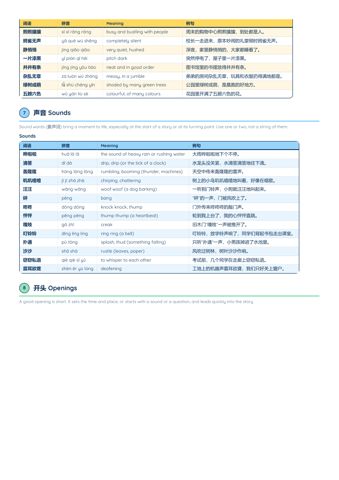
| 熙熙攘攘 | xī xī rǎng rǎng | busy and bustling with people | 周末的购物中心熙熙攘攘,到处都是人。 |
| 鸦雀无声 | yā què wú shēng | completely silent | 校长一走进来,原本吵闹的礼堂顿时鸦雀无声。 |
| 静悄悄 | jìng qiāo qiāo | very quiet, hushed | 深夜,家里静悄悄的,大家都睡着了。 |
| 一片漆黑 | yī piàn qī hēi | pitch dark | 突然停电了,屋子里一片漆黑。 |
| 井井有条 | jǐng jǐng yǒu tiáo | neat and in good order | 图书馆里的书摆放得井井有条。 |
| 杂乱无章 | zá luàn wú zhāng | messy, in a jumble | 弟弟的房间杂乱无章,玩具和衣服扔得满地都是。 |
| 绿树成荫 | lǜ shù chéng yīn | shaded by many green trees | 公园里绿树成荫,是晨跑的好地方。 |
| 五颜六色 | wǔ yán liù sè | colourful, of many colours | 花园里开满了五颜六色的花。 |
声音 Sounds
Sound words (象声词) bring a moment to life, especially at the start of a story or at its turning point. Use one or two, not a string of them.
| 词语 | 拼音 | Meaning | 例句 |
|---|---|---|---|
| 哗啦啦 | huā lā lā | the sound of heavy rain or rushing water | 大雨哗啦啦地下个不停。 |
| 滴答 | dī dā | drip, drip (or the tick of a clock) | 水龙头没关紧,水滴答滴答地往下滴。 |
| 轰隆隆 | hōng lōng lōng | rumbling, booming (thunder, machines) | 天空中传来轰隆隆的雷声。 |
| 叽叽喳喳 | jī jī zhā zhā | chirping, chattering | 树上的小鸟叽叽喳喳地叫着,好像在唱歌。 |
| 汪汪 | wāng wāng | woof woof (a dog barking) | 一听到门铃声,小狗就汪汪地叫起来。 |
| 砰 | pēng | bang | “砰”的一声,门被风吹上了。 |
| 咚咚 | dōng dōng | knock knock, thump | 门外传来咚咚咚的敲门声。 |
| 怦怦 | pēng pēng | thump thump (a heartbeat) | 轮到我上台了,我的心怦怦直跳。 |
| 嘎吱 | gā zhī | creak | 旧木门“嘎吱”一声被推开了。 |
| 叮铃铃 | dīng líng líng | ring ring (a bell) | 叮铃铃,放学铃声响了,同学们背起书包走出课室。 |
| 扑通 | pū tōng | splash, thud (something falling) | 只听“扑通”一声,小男孩掉进了水池里。 |
| 沙沙 | shā shā | rustle (leaves, paper) | 风吹过树林,树叶沙沙作响。 |
| 窃窃私语 | qiè qiè sī yǔ | to whisper to each other | 考试前,几个同学在走廊上窃窃私语。 |
| 震耳欲聋 | zhèn ěr yù lóng | deafening | 工地上的机器声震耳欲聋,我们只好关上窗户。 |
开头 Openings
A good opening is short. It sets the time and place, or starts with a sound or a question, and leads quickly into the story.
| 词语 | 拼音 | Meaning | 例句 |
|---|---|---|---|
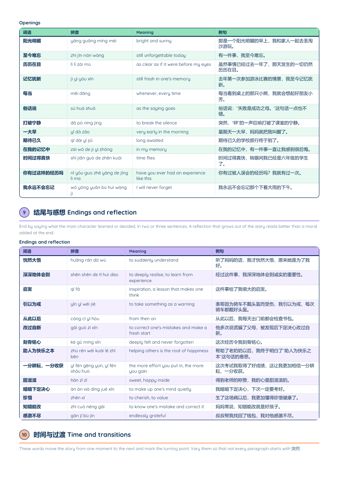
| 阳光明媚 | yáng guāng míng mèi | bright and sunny | 那是一个阳光明媚的早上,我和家人一起去圣淘沙游玩。 |
| 至今难忘 | zhì jīn nán wàng | still unforgettable today | 有一件事,我至今难忘。 |
| 历历在目 | lì lì zài mù | as clear as if it were before my eyes | 虽然事情已经过去一年了,那天发生的一切仍然历历在目。 |
| 记忆犹新 | jì yì yóu xīn | still fresh in one's memory | 去年第一次参加游泳比赛的情景,我至今记忆犹新。 |
| 每当 | měi dāng | whenever, every time | 每当看到桌上的那只小熊,我就会想起好朋友小芳。 |
| 俗话说 | sú huà shuō | as the saying goes | 俗话说:“失败是成功之母。”这句话一点也不错。 |
| 打破宁静 | dǎ pò níng jìng | to break the silence | 突然,“砰”的一声巨响打破了课室的宁静。 |
| 一大早 | yī dà zǎo | very early in the morning | 星期天一大早,妈妈就把我叫醒了。 |
| 期待已久 | qī dài yǐ jiǔ | long awaited | 期待已久的学校旅行终于到了。 |
| 在我的记忆中 | zài wǒ de jì yì zhōng | in my memory | 在我的记忆中,有一件事一直让我感到很后悔。 |
| 时间过得真快 | shí jiān guò de zhēn kuài | time flies | 时间过得真快,转眼间我已经是六年级的学生了。 |
| 你有过这样的经历吗 | nǐ yǒu guo zhè yàng de jīng lì ma | have you ever had an experience like this | 你有过被人误会的经历吗?我就有过一次。 |
| 我永远不会忘记 | wǒ yǒng yuǎn bù huì wàng jì | I will never forget | 我永远不会忘记那个下着大雨的下午。 |
结尾与感想 Endings and reflection
End by saying what the main character learned or decided, in two or three sentences. A reflection that grows out of the story reads better than a moral added at the end.
| 词语 | 拼音 | Meaning | 例句 |
|---|---|---|---|
| 恍然大悟 | huǎng rán dà wù | to suddenly understand | 听了妈妈的话,我才恍然大悟,原来她是为了我好。 |
| 深深地体会到 | shēn shēn de tǐ huì dào | to deeply realise, to learn from experience | 经过这件事,我深深地体会到诚实的重要性。 |
| 启发 | qǐ fā | inspiration, a lesson that makes one think | 这件事给了我很大的启发。 |
| 引以为戒 | yǐn yǐ wéi jiè | to take something as a warning | 表哥因为骑车不戴头盔而受伤,我引以为戒,每次骑车都戴好头盔。 |
| 从此以后 | cóng cǐ yǐ hòu | from then on | 从此以后,我每天出门前都会检查书包。 |
| 改过自新 | gǎi guò zì xīn | to correct one's mistakes and make a fresh start | 他多次说谎骗了父母,被发现后下定决心改过自新。 |
| 刻骨铭心 | kè gǔ míng xīn | deeply felt and never forgotten | 这次经历令我刻骨铭心。 |
| 助人为快乐之本 | zhù rén wéi kuài lè zhī běn | helping others is the root of happiness | 帮助了老奶奶以后,我终于明白了“助人为快乐之本”这句话的意思。 |
| 一分耕耘,一分收获 | yī fēn gēng yún, yī fēn shōu huò | the more effort you put in, the more you gain | 这次考试我取得了好成绩,这让我更加相信一分耕耘,一分收获。 |
| 甜滋滋 | tián zī zī | sweet, happy inside | 得到老师的称赞,我的心里甜滋滋的。 |
| 暗暗下定决心 | àn àn xià dìng jué xīn | to make up one's mind quietly | 我暗暗下定决心,下次一定要考好。 |
| 珍惜 | zhēn xī | to cherish, to value | 生了这场病以后,我更加懂得珍惜健康了。 |
| 知错能改 | zhī cuò néng gǎi | to know one's mistake and correct it | 妈妈常说,知错能改就是好孩子。 |
| 感激不尽 | gǎn jī bù jìn | endlessly grateful | 叔叔帮我找回了钱包,我对他感激不尽。 |
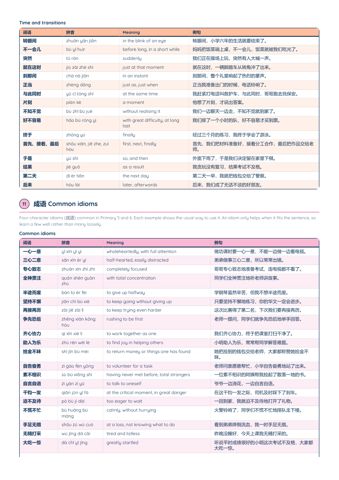
时间与过渡 Time and transitions
These words move the story from one moment to the next and mark the turning point. Vary them so that not every paragraph starts with 突然.
| 词语 | 拼音 | Meaning | 例句 |
|---|---|---|---|
| 转眼间 | zhuǎn yǎn jiān | in the blink of an eye | 转眼间,小学六年的生活就要结束了。 |
| 不一会儿 | bù yī huìr | before long, in a short while | 妈妈把饭菜端上桌,不一会儿,饭菜就被我们吃光了。 |
| 突然 | tū rán | suddenly | 我们正在操场上玩,突然有人大喊一声。 |
| 就在这时 | jiù zài zhè shí | just at that moment | 就在这时,一辆脚踏车从转角冲了出来。 |
| 刹那间 | chà nà jiān | in an instant | 刹那间,整个礼堂响起了热烈的掌声。 |
| 正当 | zhèng dāng | just as, just when | 正当我准备出门的时候,电话铃响了。 |
| 与此同时 | yǔ cǐ tóng shí | at the same time | 我赶紧打电话叫救护车,与此同时,哥哥跑去找保安。 |
| 片刻 | piàn kè | a moment | 他想了片刻,才说出答案。 |
| 不知不觉 | bù zhī bù jué | without realising it | 我们一边聊天一边走,不知不觉就到家了。 |
| 好不容易 | hǎo bù róng yì | with great difficulty, at long last | 我们排了一个小时的队,好不容易才买到票。 |
| 终于 | zhōng yú | finally | 经过三个月的练习,我终于学会了游泳。 |
| 首先、接着、最后 | shǒu xiān, jiē zhe, zuì hòu | first, next, finally | 首先,我们把材料准备好,接着分工合作,最后把作品交给老师。 |
| 于是 | yú shì | so, and then | 外面下雨了,于是我们决定留在家里下棋。 |
| 结果 | jié guǒ | as a result | 我贪玩没有复习,结果考试不及格。 |
| 第二天 | dì èr tiān | the next day | 第二天一早,我就把钱包交给了警察。 |
| 后来 | hòu lái | later, afterwards | 后来,我们成了无话不谈的好朋友。 |
成语 Common idioms
Four-character idioms (成语) common in Primary 5 and 6. Each example shows the usual way to use it. An idiom only helps when it fits the sentence, so learn a few well rather than many loosely.
| 词语 | 拼音 | Meaning | 例句 |
|---|---|---|---|
| 一心一意 | yī xīn yī yì | wholeheartedly, with full attention | 做功课时要一心一意,不能一边做一边看电视。 |
| 三心二意 | sān xīn èr yì | half-hearted, easily distracted | 弟弟做事三心二意,所以常常出错。 |
| 专心致志 | zhuān xīn zhì zhì | completely focused | 哥哥专心致志地准备考试,连电视都不看了。 |
| 全神贯注 | quán shén guàn zhù | with total concentration | 同学们全神贯注地听老师讲故事。 |
| 半途而废 | bàn tú ér fèi | to give up halfway | 学钢琴虽然辛苦,但我不想半途而废。 |
| 坚持不懈 | jiān chí bù xiè | to keep going without giving up | 只要坚持不懈地练习,你的华文一定会进步。 |
| 再接再厉 | zài jiē zài lì | to keep trying even harder | 这次比赛得了第二名,下次我们要再接再厉。 |
| 争先恐后 | zhēng xiān kǒng hòu | rushing to be first | 老师一提问,同学们就争先恐后地举手回答。 |
| 齐心协力 | qí xīn xié lì | to work together as one | 我们齐心协力,终于把课室打扫干净了。 |
| 助人为乐 | zhù rén wéi lè | to find joy in helping others | 小明助人为乐,常常帮同学解答难题。 |
| 拾金不昧 | shí jīn bù mèi | to return money or things one has found | 她把捡到的钱包交给老师,大家都称赞她拾金不昧。 |
| 自告奋勇 | zì gào fèn yǒng | to volunteer for a task | 老师问谁愿意帮忙,小华自告奋勇地站了出来。 |
| 素不相识 | sù bù xiāng shí | having never met before, total strangers | 一位素不相识的阿姨帮我捡起了散落一地的书。 |
| 自言自语 | zì yán zì yǔ | to talk to oneself | 爷爷一边浇花,一边自言自语。 |
| 千钧一发 | qiān jūn yī fà | at the critical moment, in great danger | 在这千钧一发之际,司机及时踩下了刹车。 |
| 迫不及待 | pò bù jí dài | too eager to wait | 一回到家,我就迫不及待地打开了礼物。 |
| 不慌不忙 | bù huāng bù máng | calmly, without hurrying | 火警铃响了,同学们不慌不忙地排队走下楼。 |
| 手足无措 | shǒu zú wú cuò | at a loss, not knowing what to do | 看到弟弟摔倒流血,我一时手足无措。 |
| 无精打采 | wú jīng dǎ cǎi | tired and listless | 昨晚没睡好,今天上课我无精打采的。 |
| 大吃一惊 | dà chī yī jīng | greatly startled | 听说平时成绩很好的小明这次考试不及格,大家都大吃一惊。 |
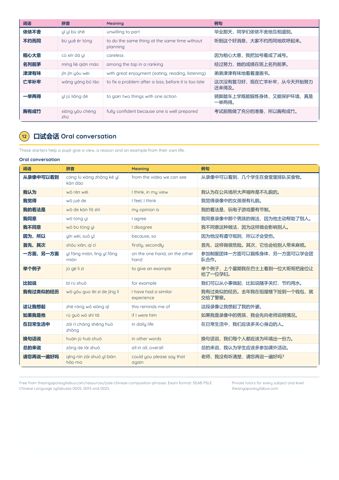
| 依依不舍 | yī yī bù shě | unwilling to part | 毕业那天,同学们依依不舍地互相道别。 |
| 不约而同 | bù yuē ér tóng | to do the same thing at the same time without planning | 听到这个好消息,大家不约而同地欢呼起来。 |
| 粗心大意 | cū xīn dà yì | careless | 因为粗心大意,我把加号看成了减号。 |
| 名列前茅 | míng liè qián máo | among the top in a ranking | 经过努力,她的成绩在班上名列前茅。 |
| 津津有味 | jīn jīn yǒu wèi | with great enjoyment (eating, reading, listening) | 弟弟津津有味地看着漫画书。 |
| 亡羊补牢 | wáng yáng bǔ láo | to fix a problem after a loss, before it is too late | 这次没有复习好,现在亡羊补牢,从今天开始努力还来得及。 |
| 一举两得 | yī jǔ liǎng dé | to gain two things with one action | 骑脚踏车上学既能锻炼身体,又能保护环境,真是一举两得。 |
| 胸有成竹 | xiōng yǒu chéng zhú | fully confident because one is well prepared | 考试前我做了充分的准备,所以胸有成竹。 |
口试会话 Oral conversation
These starters help a pupil give a view, a reason and an example from their own life.
| 词语 | 拼音 | Meaning | 例句 |
|---|---|---|---|
| 从录像中可以看到 | cóng lù xiàng zhōng kě yǐ kàn dào | from the video we can see | 从录像中可以看到,几个学生在食堂里排队买食物。 |
| 我认为 | wǒ rèn wéi | I think, in my view | 我认为在公共场所大声喧哗是不礼貌的。 |
| 我觉得 | wǒ jué de | I feel, I think | 我觉得录像中的女孩很有礼貌。 |
| 我的看法是 | wǒ de kàn fǎ shì | my opinion is | 我的看法是,玩电子游戏要有节制。 |
| 我同意 | wǒ tóng yì | I agree | 我同意录像中那个男孩的做法,因为他主动帮助了别人。 |
| 我不同意 | wǒ bù tóng yì | I disagree | 我不同意这种做法,因为这样做会影响别人。 |
| 因为、所以 | yīn wèi, suǒ yǐ | because, so | 因为他没有遵守规则,所以才会受伤。 |
| 首先、其次 | shǒu xiān, qí cì | firstly, secondly | 首先,这样做很危险。其次,它也会给别人带来麻烦。 |
| 一方面、另一方面 | yī fāng miàn, lìng yī fāng miàn | on the one hand, on the other hand | 参加制服团体一方面可以锻炼身体,另一方面可以学会团队合作。 |
| 举个例子 | jǔ gè lì zi | to give an example | 举个例子,上个星期我在巴士上看到一位大哥哥把座位让给了一位孕妇。 |
| 比如说 | bǐ rú shuō | for example | 我们可以从小事做起,比如说随手关灯、节约用水。 |
| 我有过类似的经历 | wǒ yǒu guo lèi sì de jīng lì | I have had a similar experience | 我有过类似的经历。去年我在组屋楼下捡到一个钱包,就交给了警察。 |
| 这让我想起 | zhè ràng wǒ xiǎng qǐ | this reminds me of | 这段录像让我想起了我的外婆。 |
| 如果我是他 | rú guǒ wǒ shì tā | if I were him | 如果我是录像中的男孩,我会先向老师说明情况。 |
| 在日常生活中 | zài rì cháng shēng huó zhōng | in daily life | 在日常生活中,我们应该多关心身边的人。 |
| 换句话说 | huàn jù huà shuō | in other words | 换句话说,我们每个人都应该为环境出一份力。 |
| 总的来说 | zǒng de lái shuō | all in all, overall | 总的来说,我认为学生应该多参加课外活动。 |
| 请您再说一遍好吗 | qǐng nín zài shuō yī biàn hǎo ma | could you please say that again | 老师,我没有听清楚,请您再说一遍好吗? |
Inside the PDF
7 A4 pages, ready to print. Tap a page to open the PDF there.
Questions students ask
How long must a PSLE Chinese composition be?
For Chinese Language (0005) the composition must be at least 100 characters, and pupils choose either a given topic or a picture composition. For Higher Chinese (0015) the narrative must be at least 200 characters. Both papers last 50 minutes and carry 40 marks.
Can my child use a dictionary in the PSLE Chinese composition paper?
Yes. The SEAB syllabus for Chinese Language (0005) says candidates may use a dictionary prescribed by SEAB while writing. Ask the school which dictionaries are allowed.
Is there a composition in PSLE Foundation Chinese?
No. Foundation Chinese (0025) has a language use and comprehension paper, an oral paper and a listening paper, but no composition.
Keep revising
- PSLE Chinese study guidePSLE Chinese exam format and tips
- PSLE Math FormulasPSLE (Primary 1 to 6) · free PDF
- PSLE English Composition PhrasesPSLE (Primary 5 and 6) · free PDF
- PSLE Science KeywordsPSLE (Primary 3 to 6) · free PDF
- PSLE Score calculatorAdd up the four AL grades
- All free resourcesPSLE, O-Level and A-Level
Source
- SEAB, PSLE Chinese Language syllabus 0005 (2026)
- SEAB, PSLE Higher Chinese Language syllabus 0015 (2026)
- SEAB, PSLE Foundation Chinese Language syllabus 0025 (2026)
The words, meanings and example sentences are our own. The exam format details come from the SEAB syllabuses, and if they differ, the SEAB document is right. Tell us and we will fix it.
Want a Chinese tutor?
Tell us the level and we send a shortlist of tutors on WhatsApp within 16 hours. You choose the tutor. About Chinese tuition